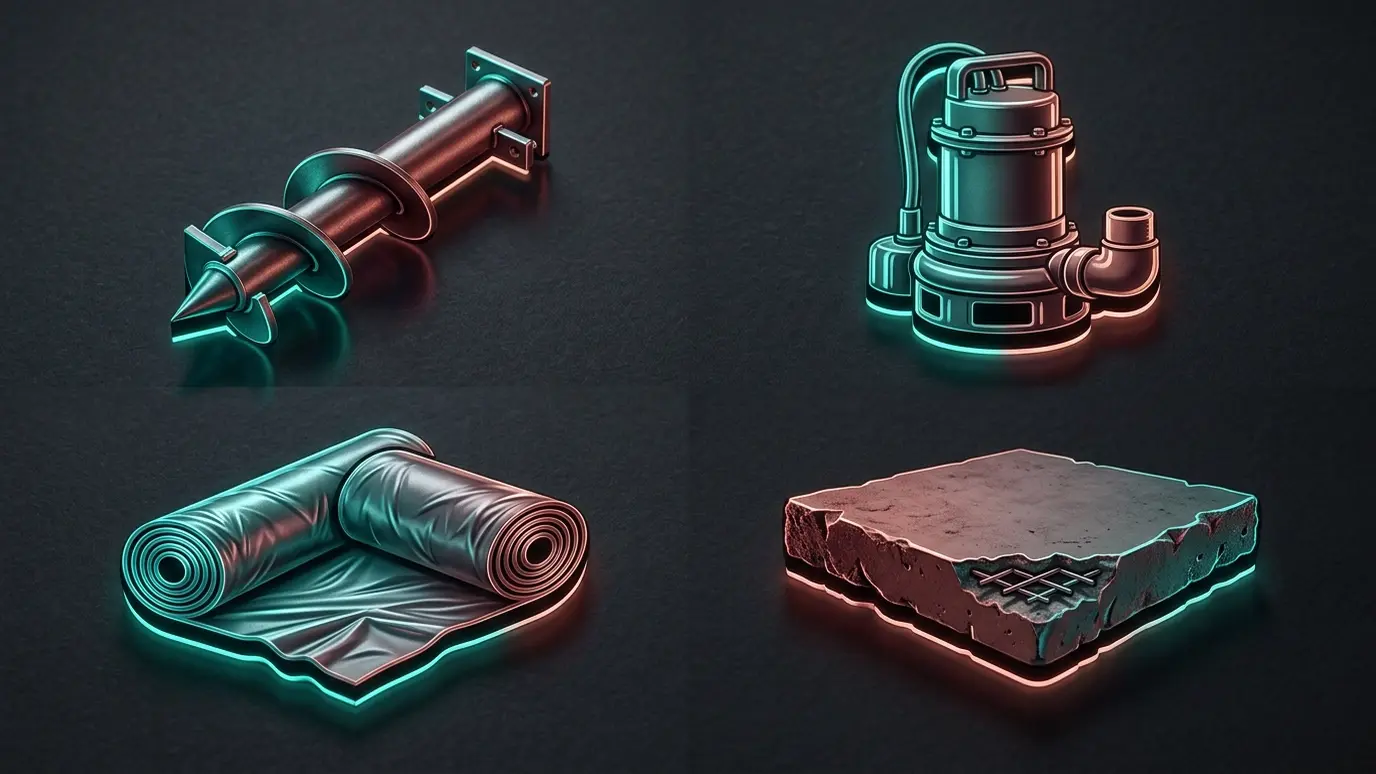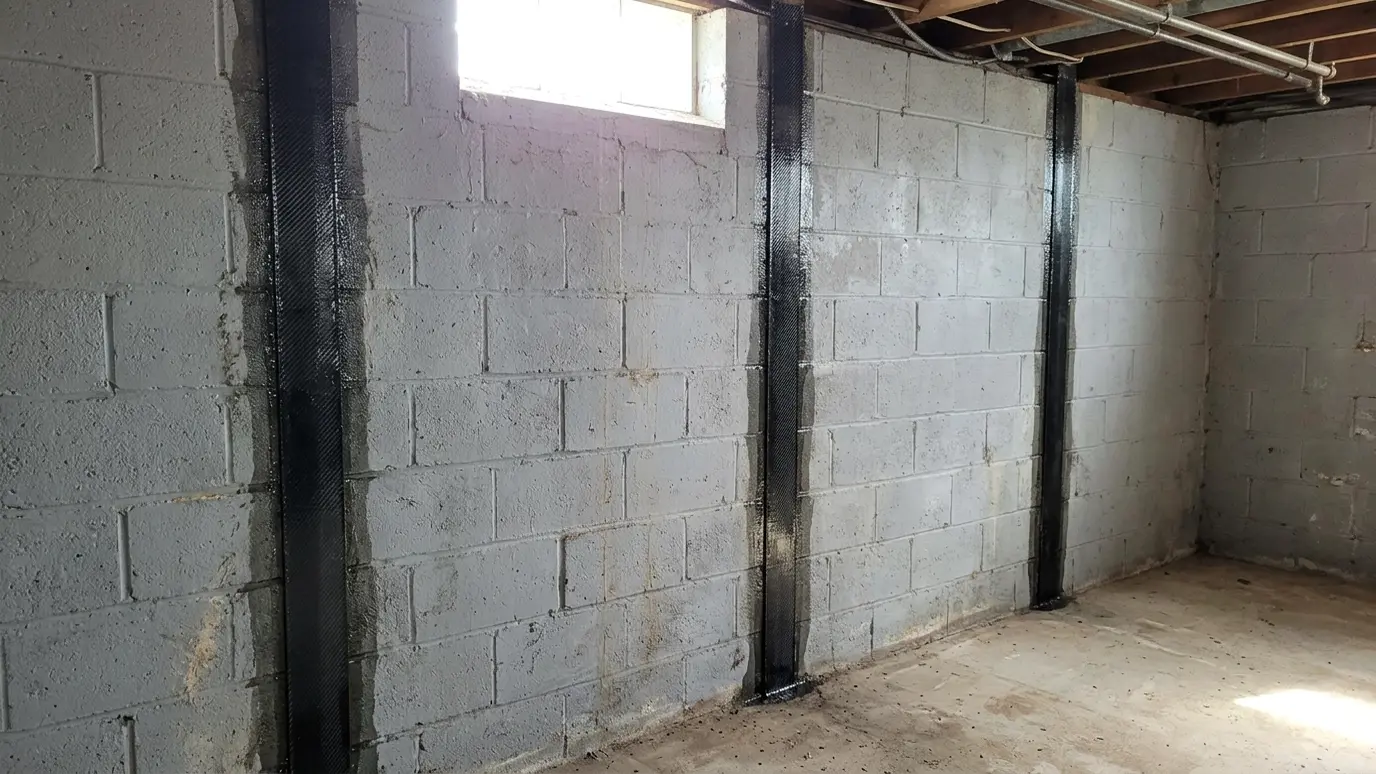
Two ways to hold a basement wall in place: strong steel anchors tied to soil outside, or thin carbon fiber straps glued to the wall.
When a basement wall starts to move inward, there are two common ways to hold it. Carbon fiber straps are thin, flat bands glued to the inside of the wall with epoxy. They are extremely strong when pulled, they take almost no room and they are installed in a day. Wall anchors use a steel plate inside the basement, a rod that passes through the wall and an earth anchor set in stable soil outside the pressure zone.
Which one belongs on your wall depends on how far it has moved and what kind of wall it is. Carbon fiber is a good match for mild bowing in block or poured walls. Anchors are a better fit when movement is larger or when you want the option to tighten and gradually straighten the wall. We explain both, show where each would go and choose the one that gives the right margin of safety.
Fixed vertically at even spacing and anchored at the floor and joists, they stop inward movement and are painted over easily.
A plate on the wall ties by a rod to an earth anchor in the yard. Tightening over time can bring a wall back a little.
Anchors need a clear strip of yard. Straps need none, which makes them a fit for tight lots or finished yards.
Neither stops water or cures the cause. Drainage and grading are still part of the plan, and we say so up front.
Drag the handle to compare.
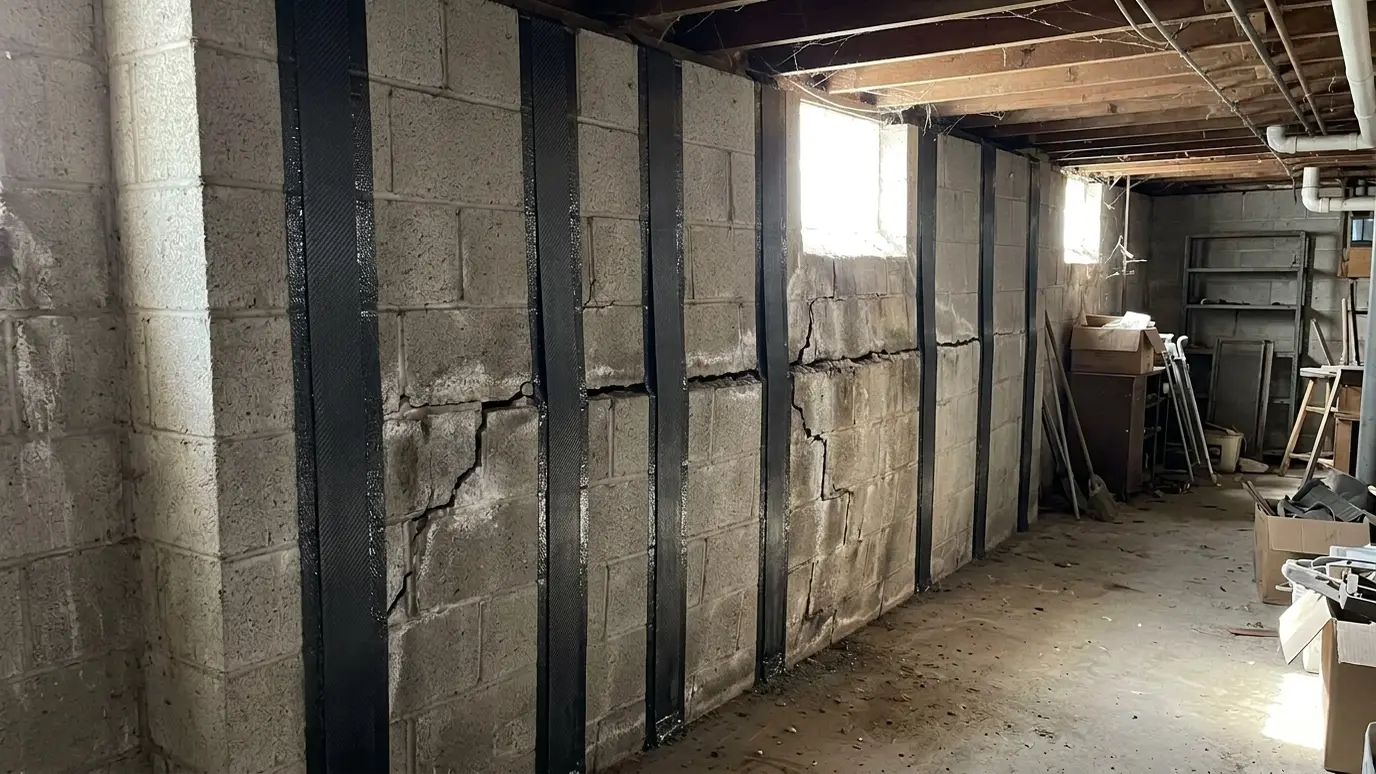
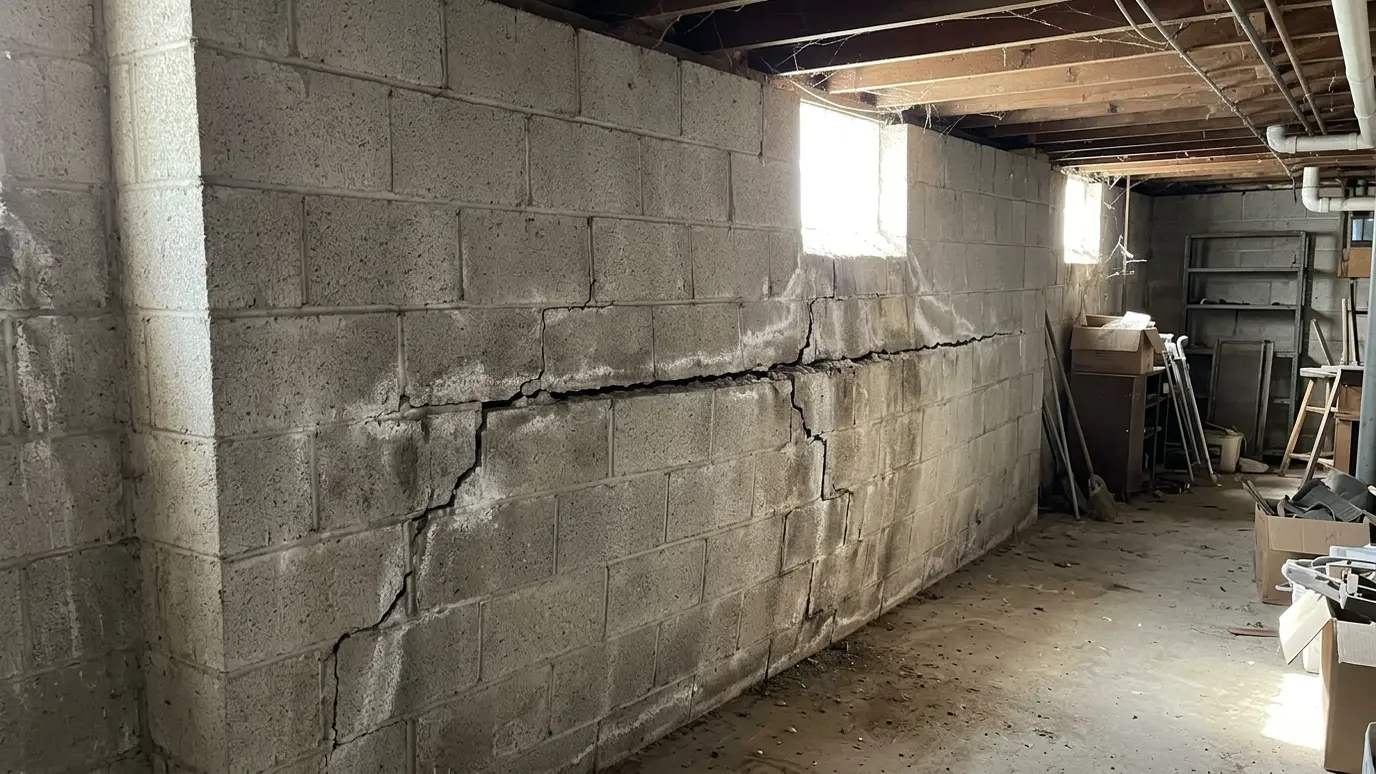 BeforeAfter
Choose what fits.
Holds the wall.
Planned, not guessed.
Little disruption.
Lower the pressure.
Looks tidy.
Every topic has its own page with what to expect and how we approach it.
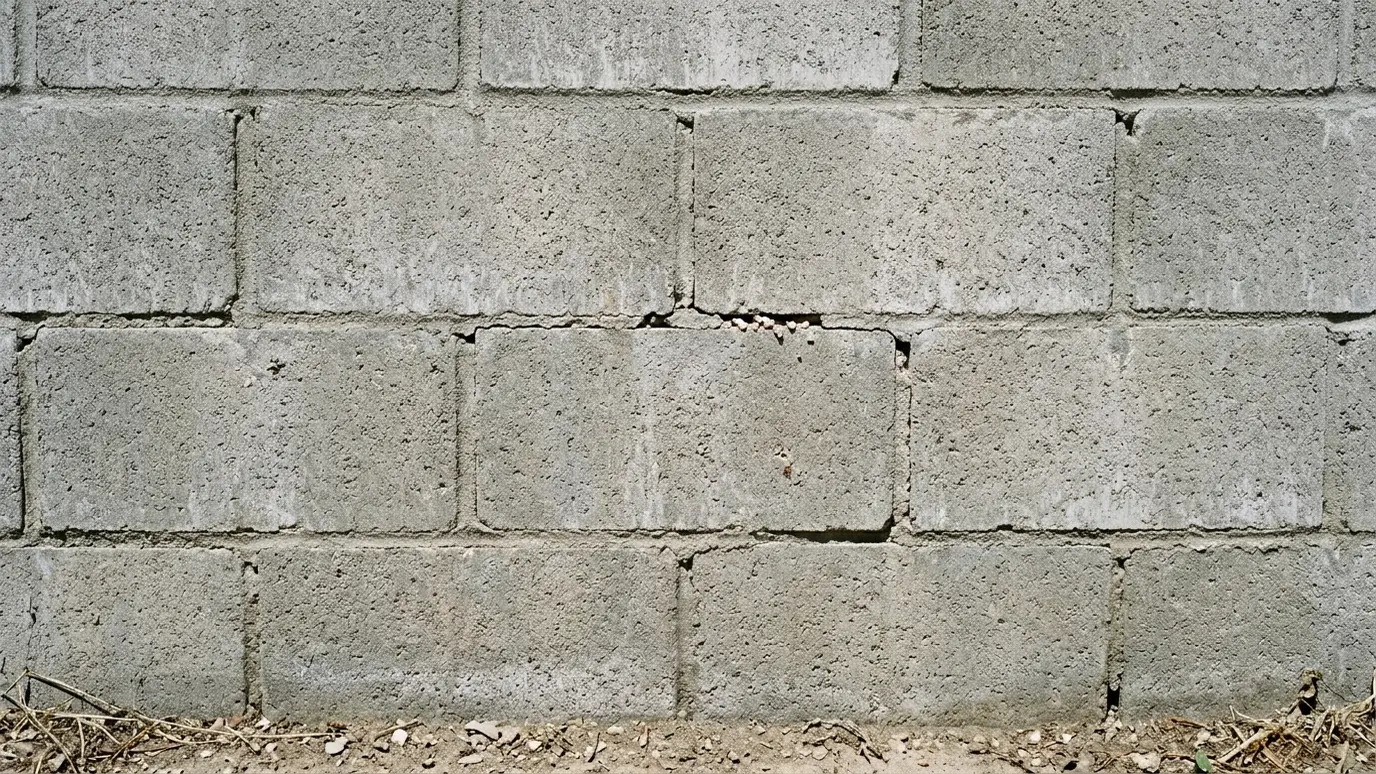 Material guideConcrete Block FoundationsBlock foundations are common in mid-century homes. They are strong in compression and weak sideways. Learn the signs…Learn more
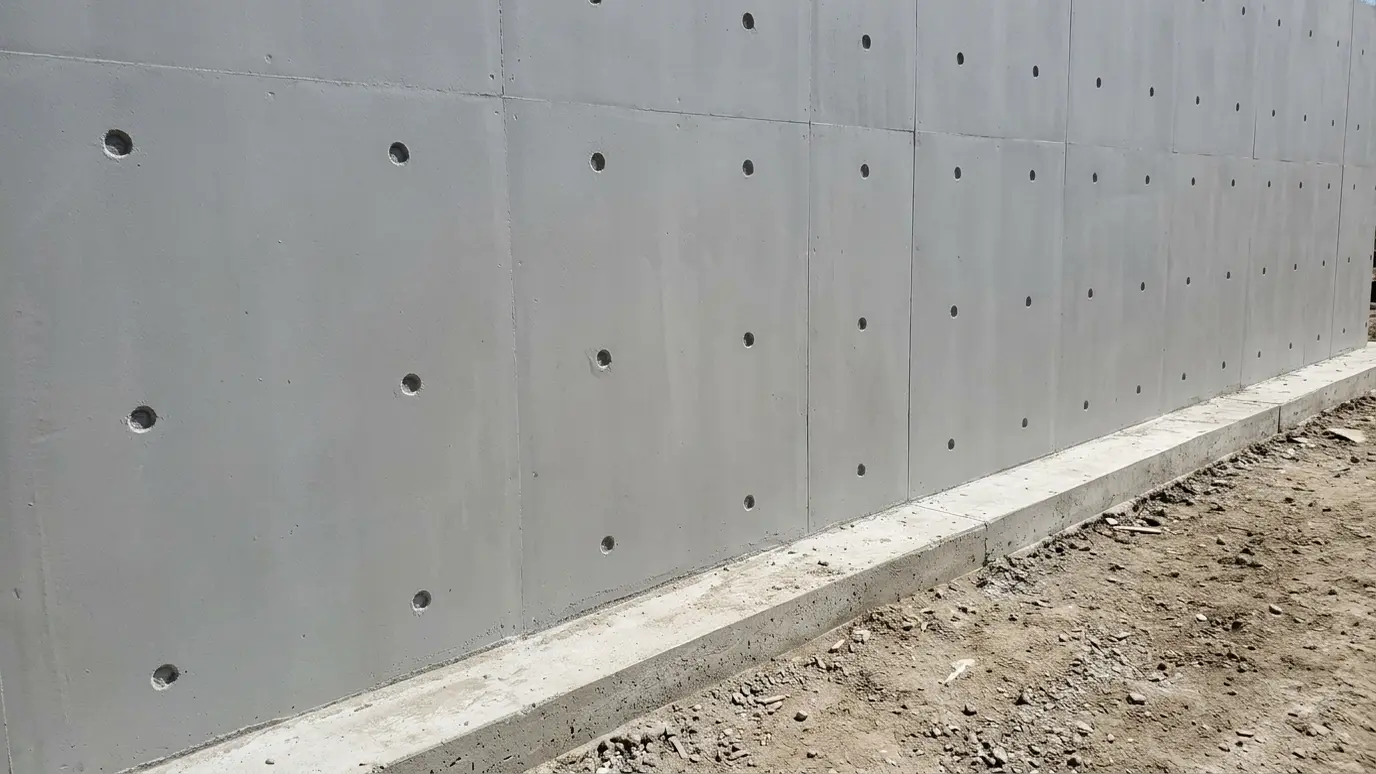 Material guidePoured Concrete FoundationsPoured concrete is strong, seamless and common in newer homes. Here is how it works, where it cracks…Learn more
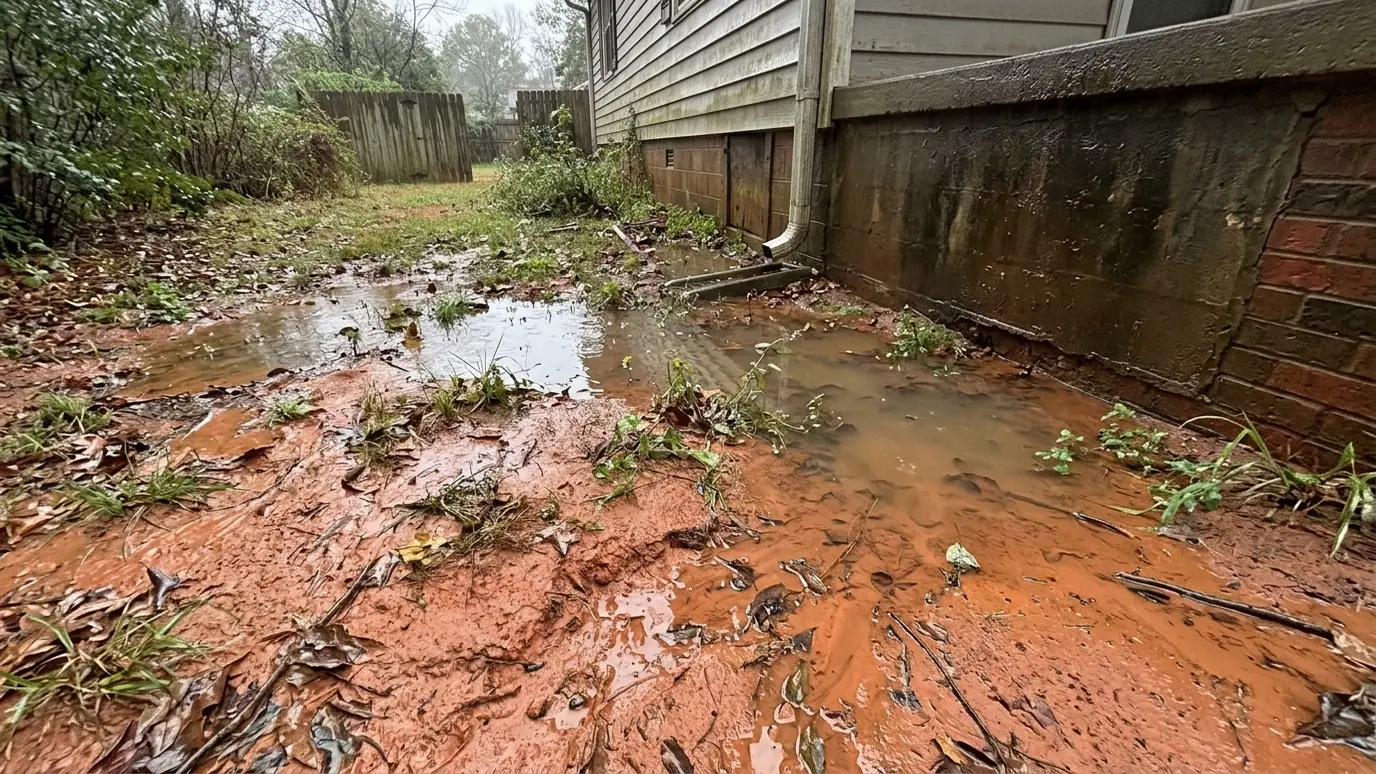 Project situationClay Soil and Wet YardsMiddle Tennessee clay swells when wet and shrinks when dry. That movement is behind many cracks, leaks and…Learn more
Pick the crack type, measure its width and tell us if it is changing to see how much attention it may need.
You tell us what you have noticed, a crack, a damp smell, a sloping floor or standing water, and we set a visit that fits your day.
We look closely inside and out, measure floors and cracks, check moisture and drainage and take photos of anything of note.
We explain what is urgent, what can wait and what is optional, and give you a written scope and options.
We lay floor protection, mark utilities, protect landscaping and set up before any digging or drilling begins.
We install, seal, lift or repair with the right tools and materials, checking our work as we go.
We clean up, restore the surface, show you what we did, share care tips and set a reminder for your next check.
Both are strong. Straps resist further movement. Anchors can also be tightened to ease a wall back.
No. Carbon fiber does not corrode, which is useful in damp basements.
Small disturbed areas are restored. The earth anchors sit below the surface.
Yes. Straps are thin and plates are low profile, so framing and finishes can go on.
Most walls take one to a few days, depending on length and access.
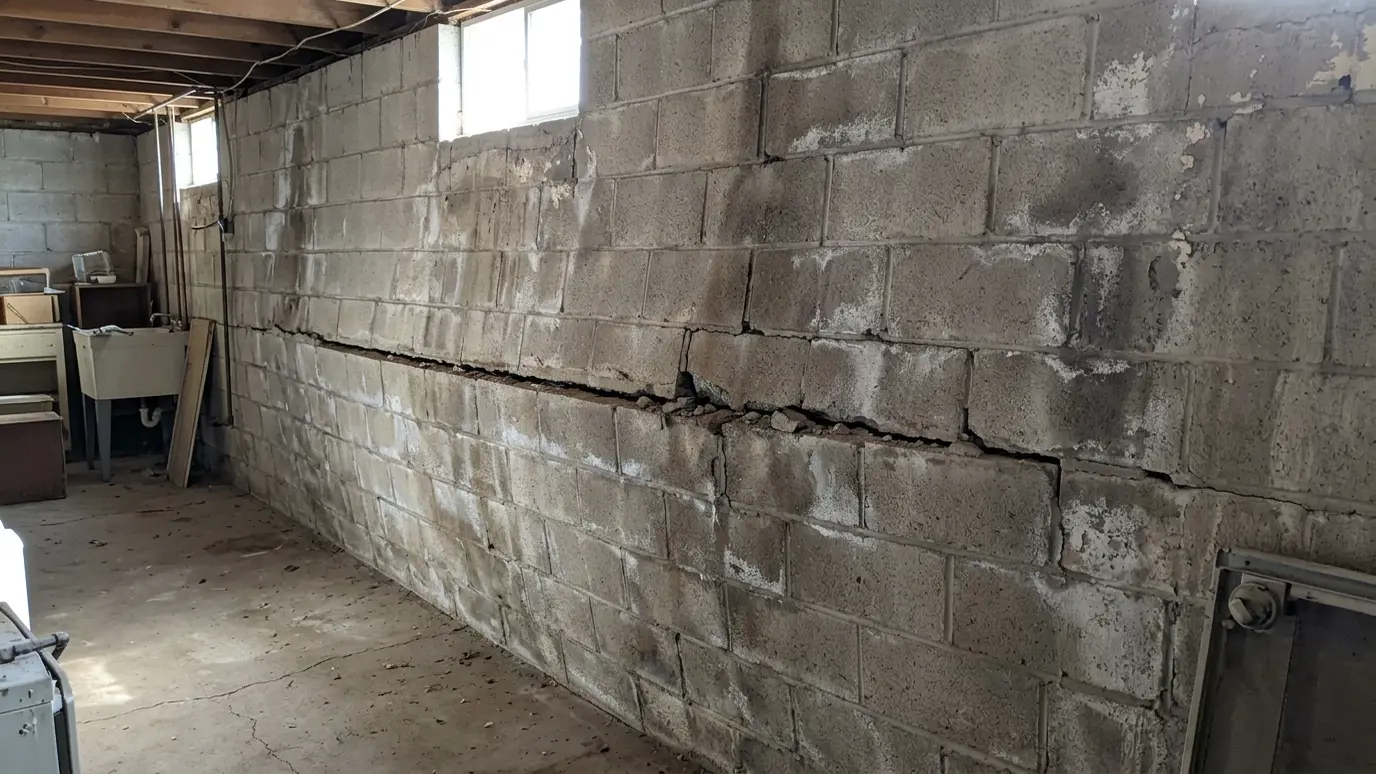 Bowing Wall RepairA basement wall that curves inward or tilts needs support before it moves further. We measure it and…Explore
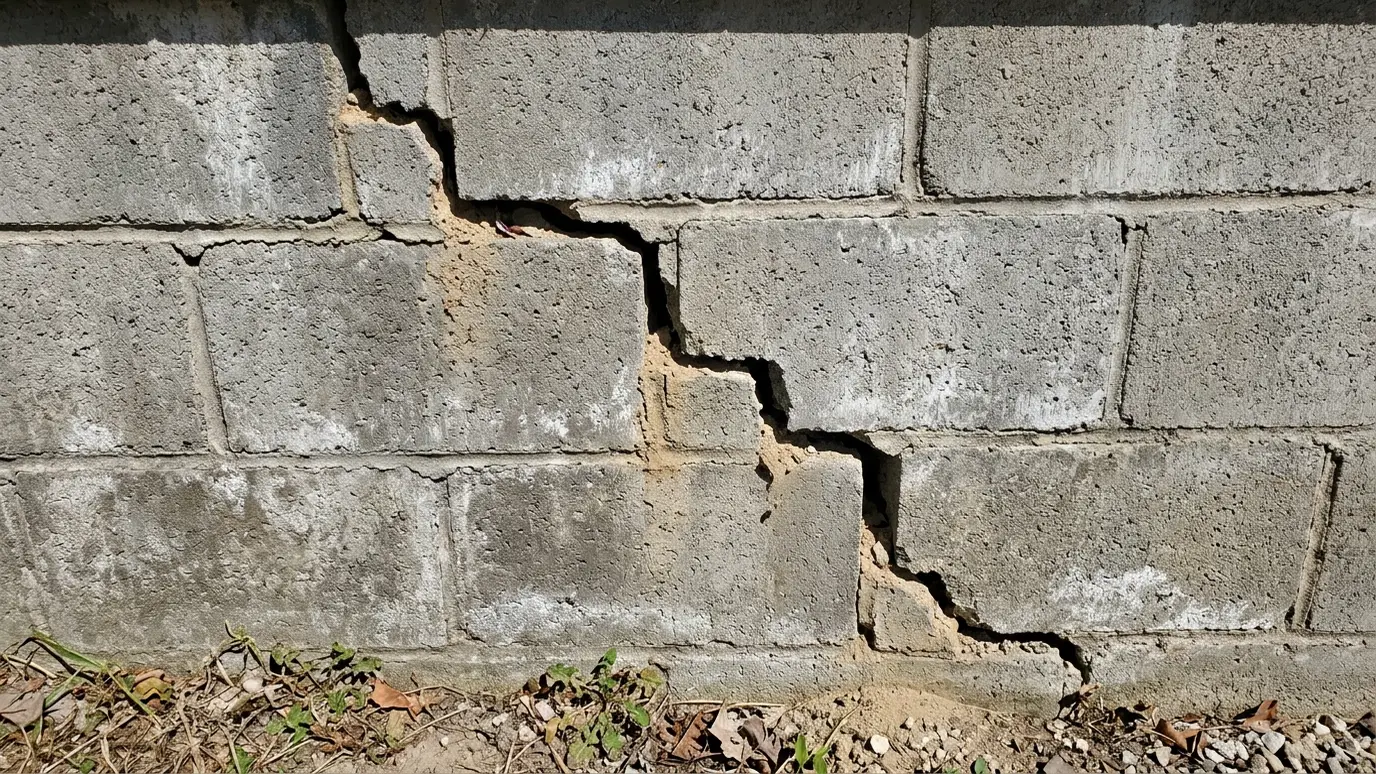 Block and Stem Wall RepairConcrete block and stem walls can crack, bow and crumble. We repair the wall, rebuild failed sections and…Explore
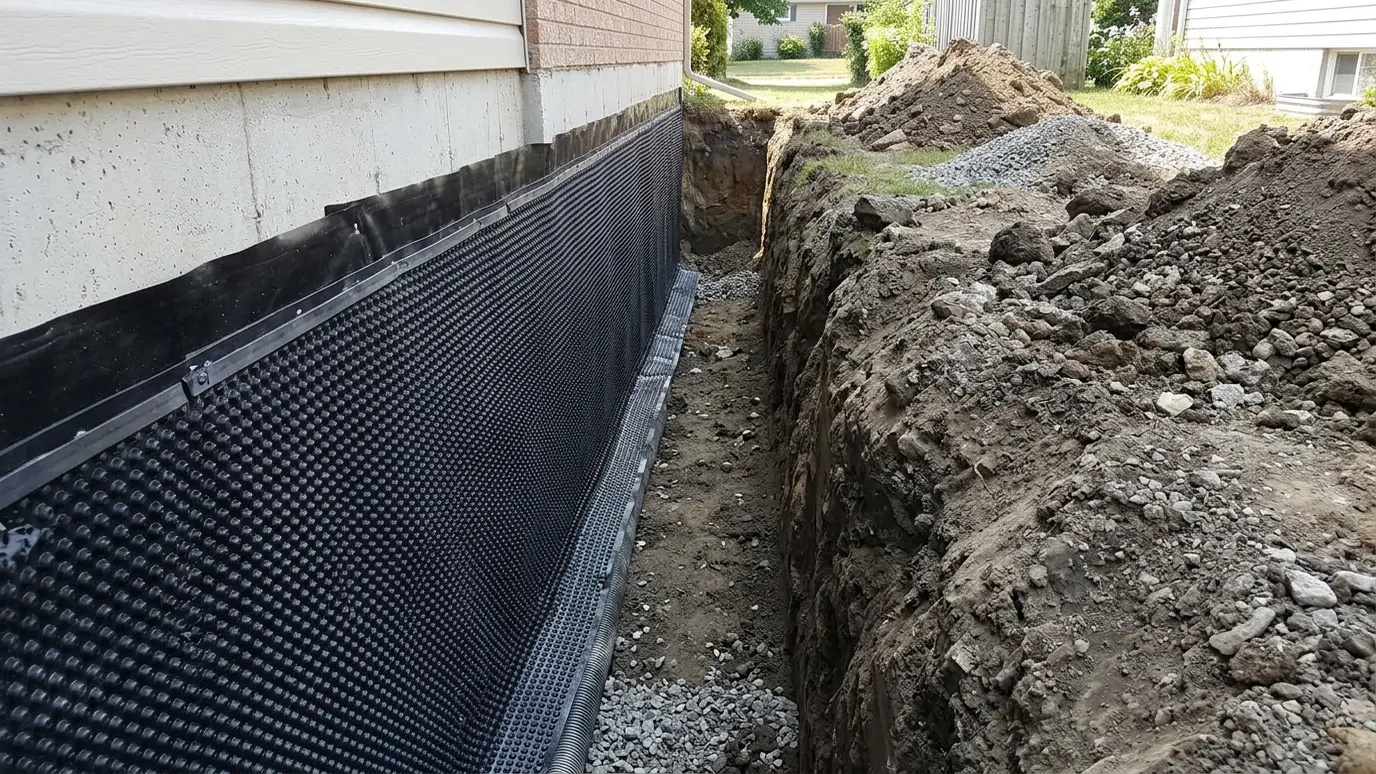 Exterior WaterproofingStopping water before it reaches the wall: excavation, membrane, drain tile and grading that protect the foundation from…Explore
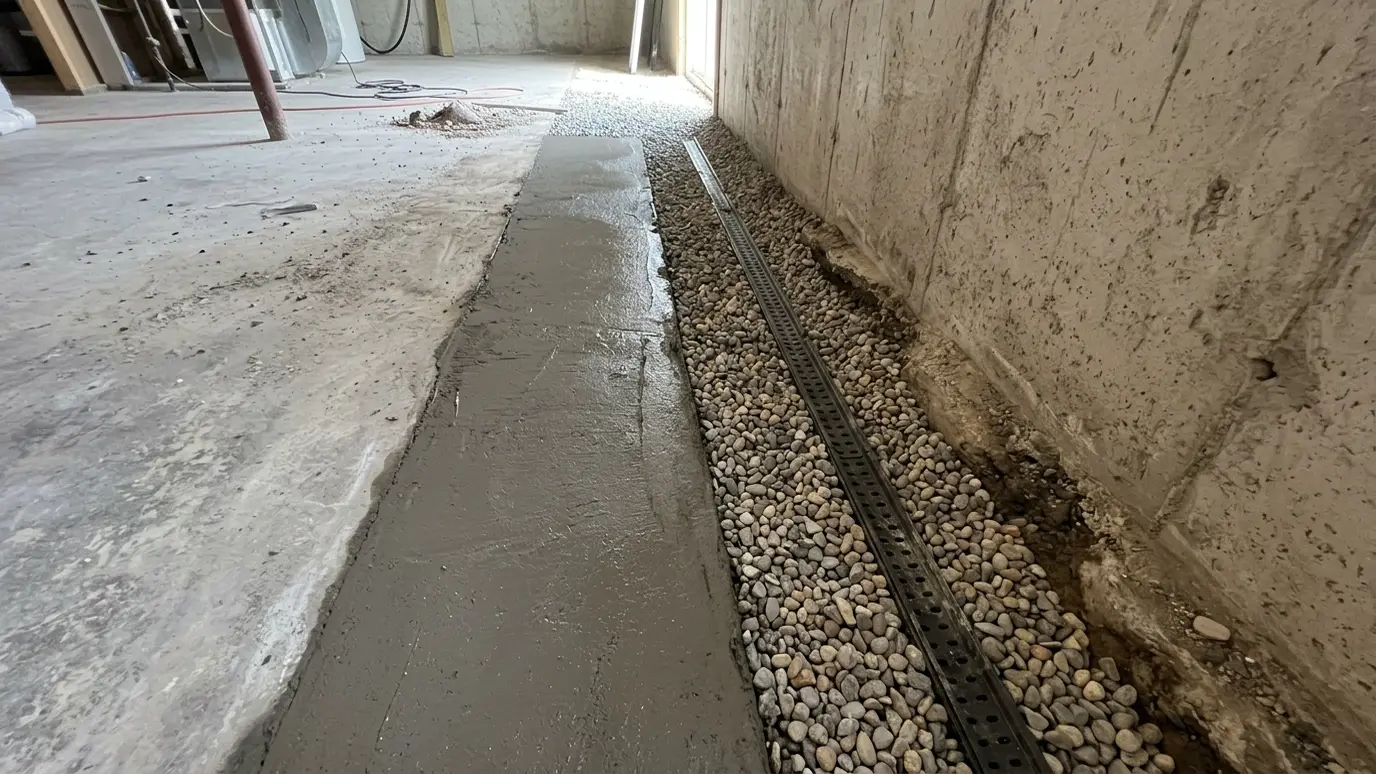 Interior Drain SystemsA drain along the inside of the footing catches water at the floor joint and carries it to…Explore
Tell us about the project and we will call you back to talk it through.
Or call (615) 357-7797 to talk now.