What settlement is
Every house settles a little in its first years as soil compresses under the weight. That is normal and usually stops.
Trouble begins when settlement continues or varies from one part of the house to another.
Common causes
Clay that shrinks and swells, poorly compacted fill, washed-out soil from leaking gutters and plumbing, and tree roots drawing moisture are the usual causes here.
Karst voids and old drainage paths may play a role in some areas.
The signs
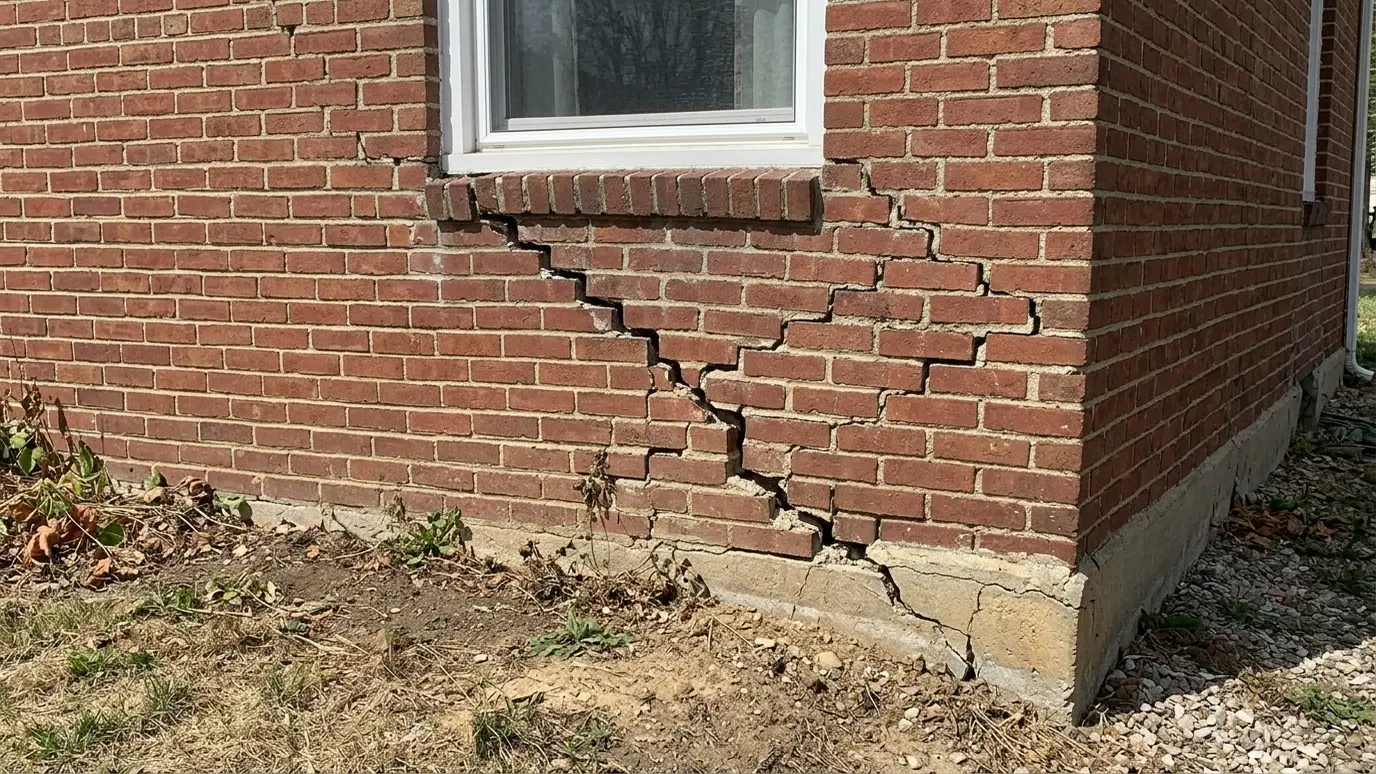
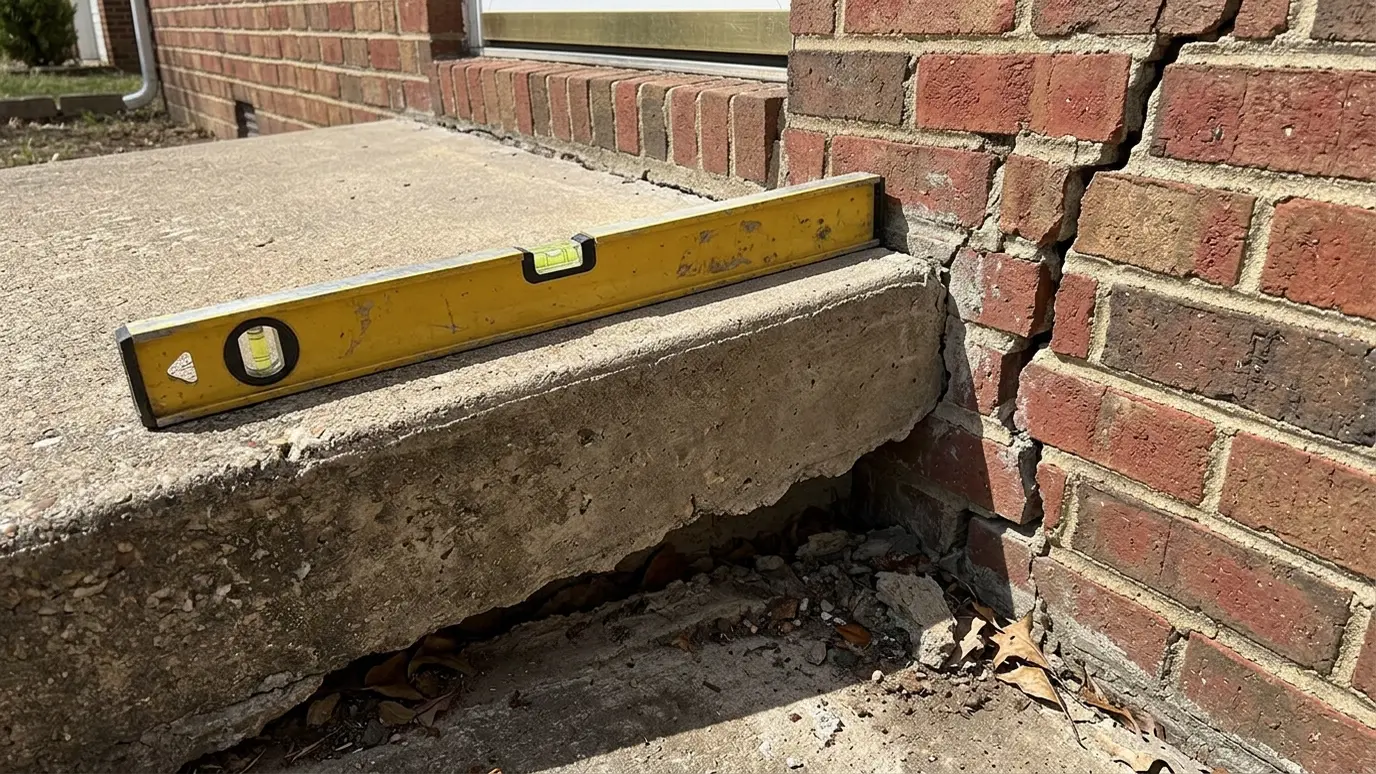
Sticking doors, sloping floors, stair-step cracks and gaps at trim are signs, usually clustered at one corner or side.
A level and a string line make the pattern easier to see.
Finding the cause
A good repair starts with the cause: roof water, drainage, tree roots, soil type or a plumbing leak.
Support without fixing the cause may only move the problem.
Repairs
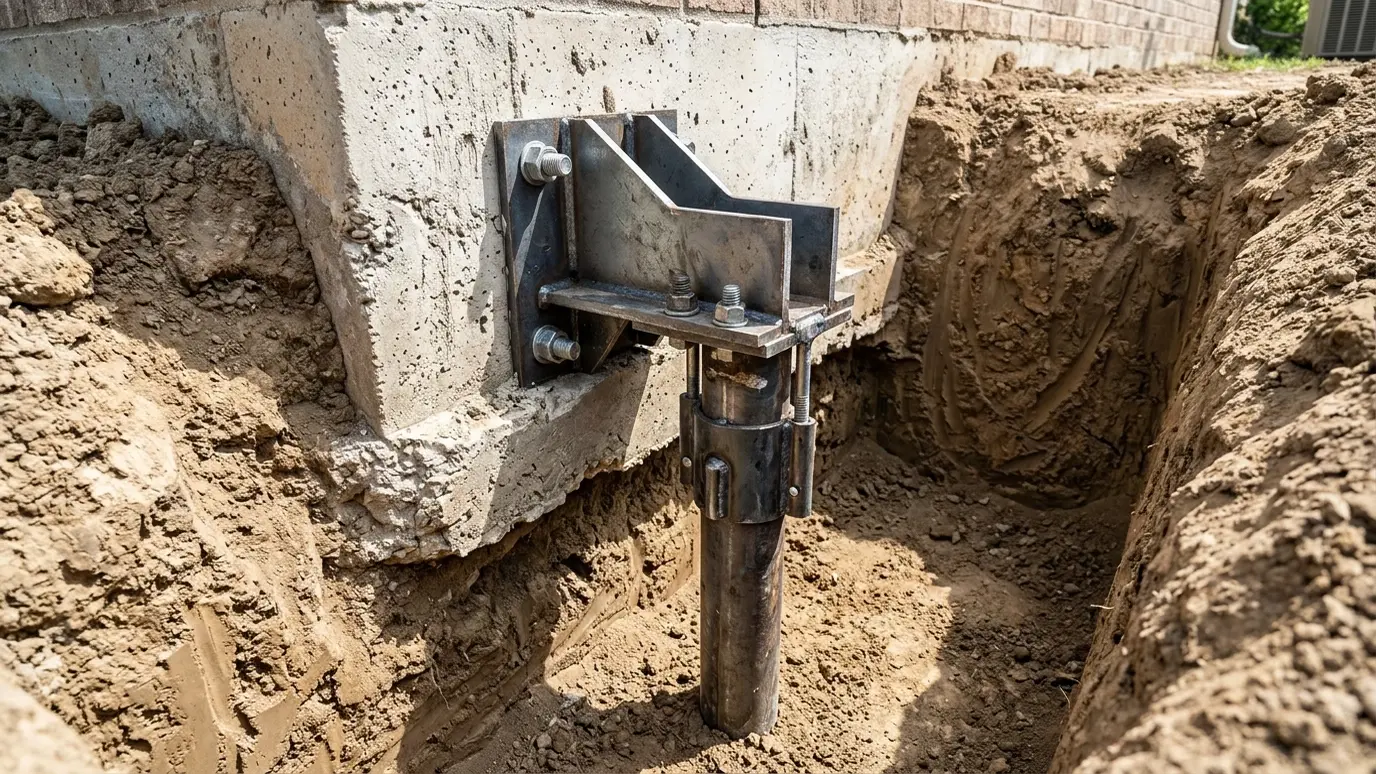
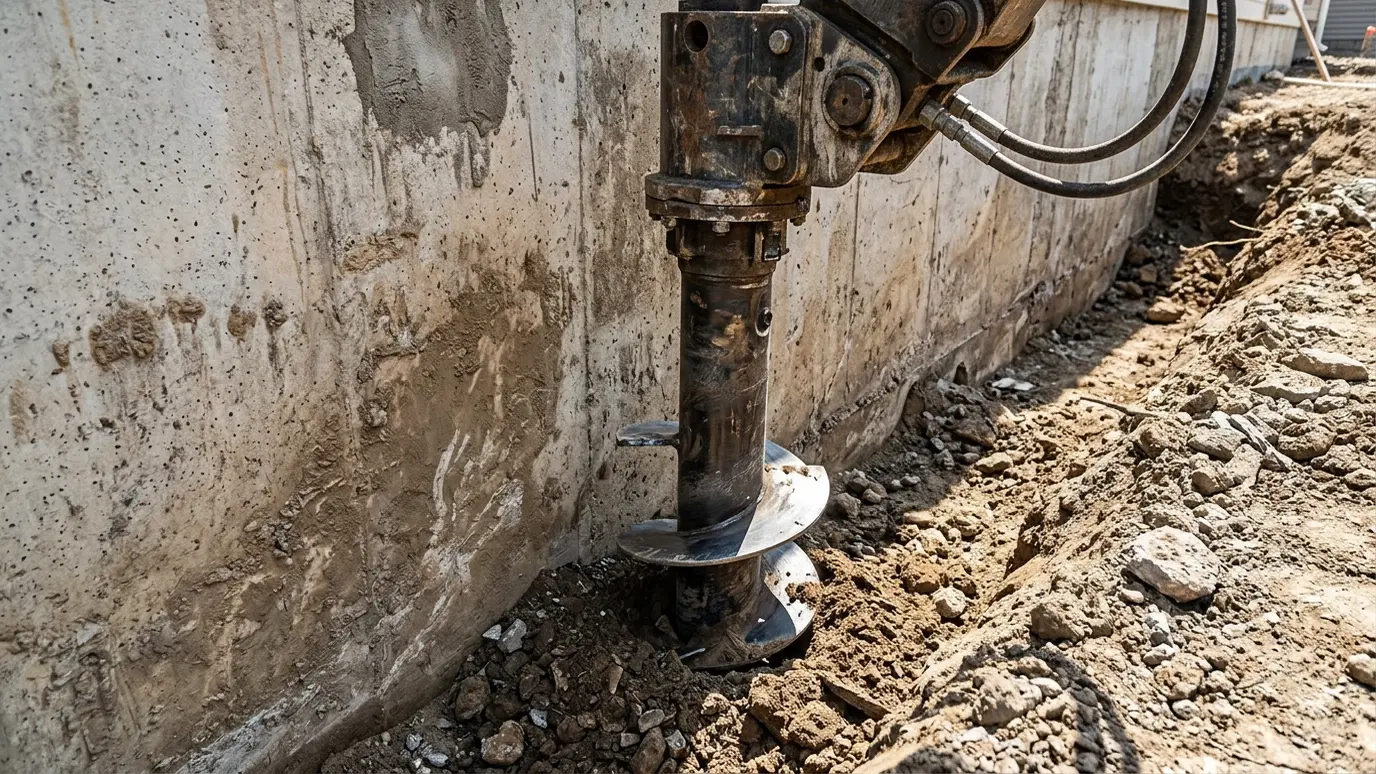
Steel push piers or helical piers carry the footing to stable ground, and a coordinated lift can recover some of the drop.
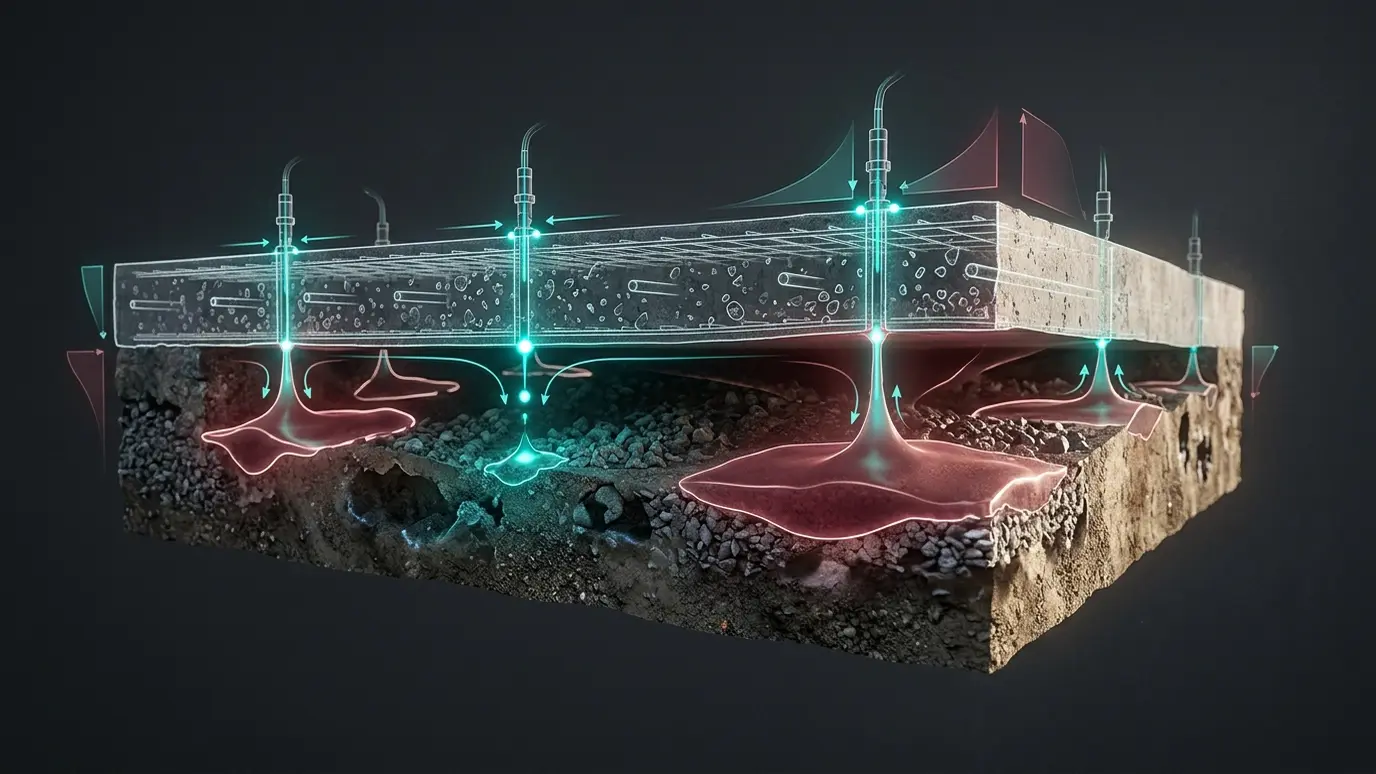
Foam or grout can fill voids under slabs and porches.
After the repair
Keep water moving away from the house, watch the cracks and doors and keep records. A maintenance visit once a year catches changes early.
Properly supported foundations should stop sinking.
Treat settlement as a cause to find, not just a symptom to patch: fix the water, then support the house on ground that does not move.