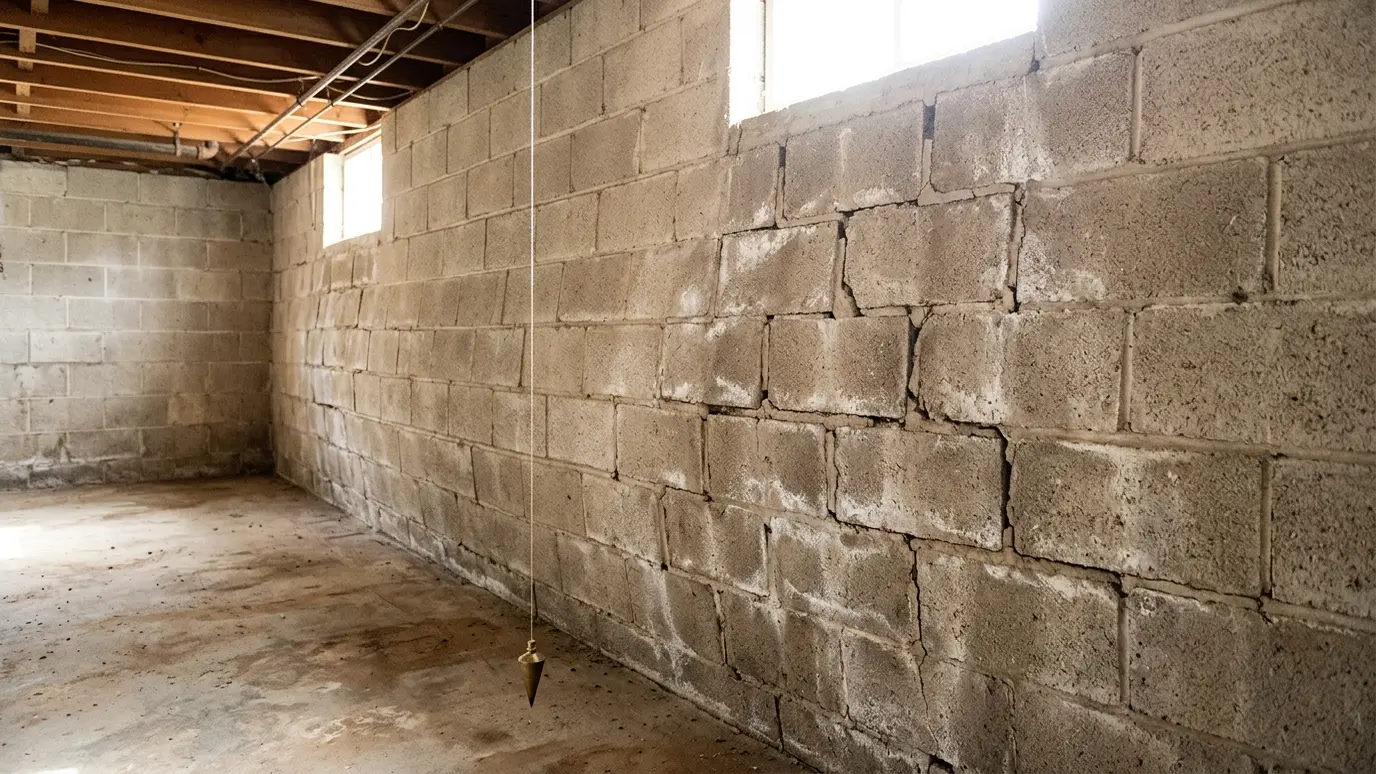
Why walls bow
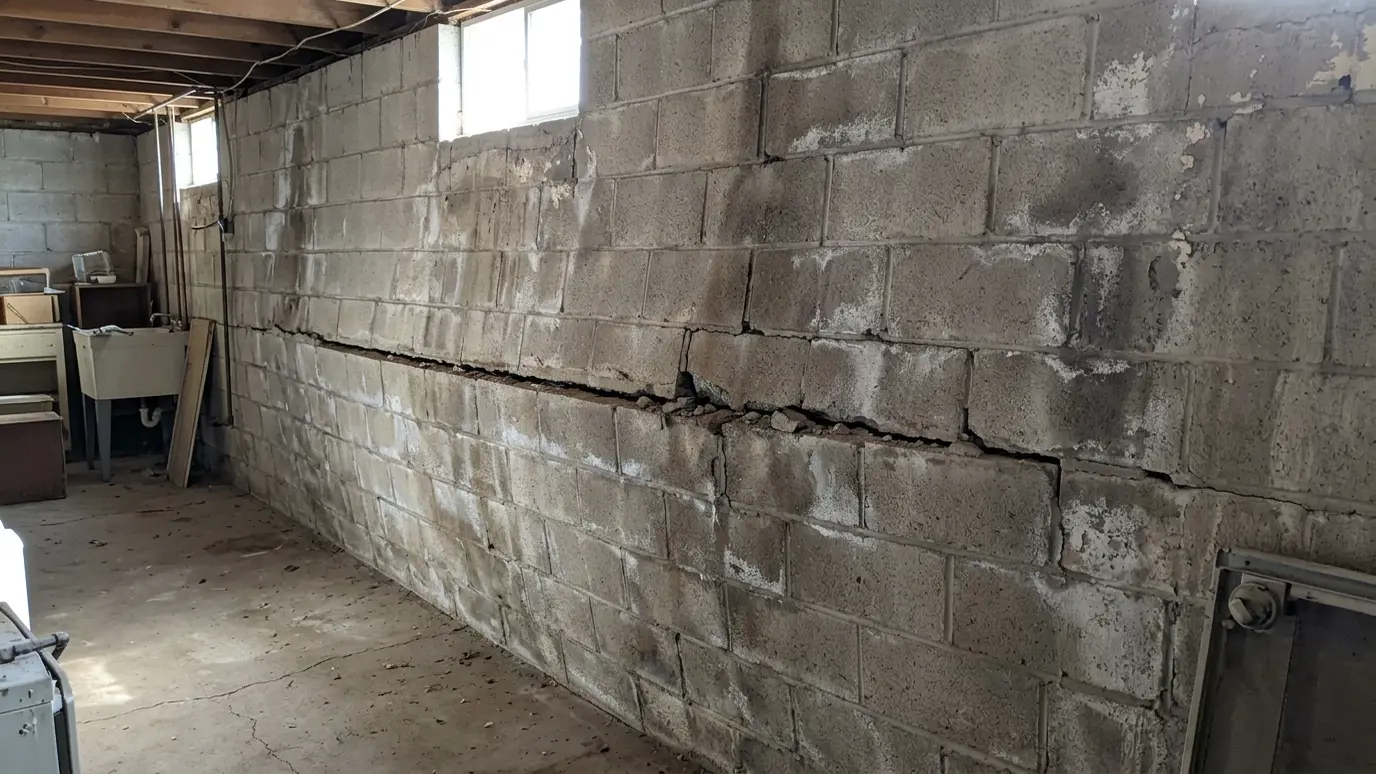
Wet clay soil swells and pushes on the wall. Block walls are strong down but weak sideways, so they bend first.
Poor drainage and frost add to the load.
How to measure
Hang a plumb line or hold a straight board against the wall and measure the gap at several heights. Mark and date it.
A change over weeks or months is the key.
Mild bowing
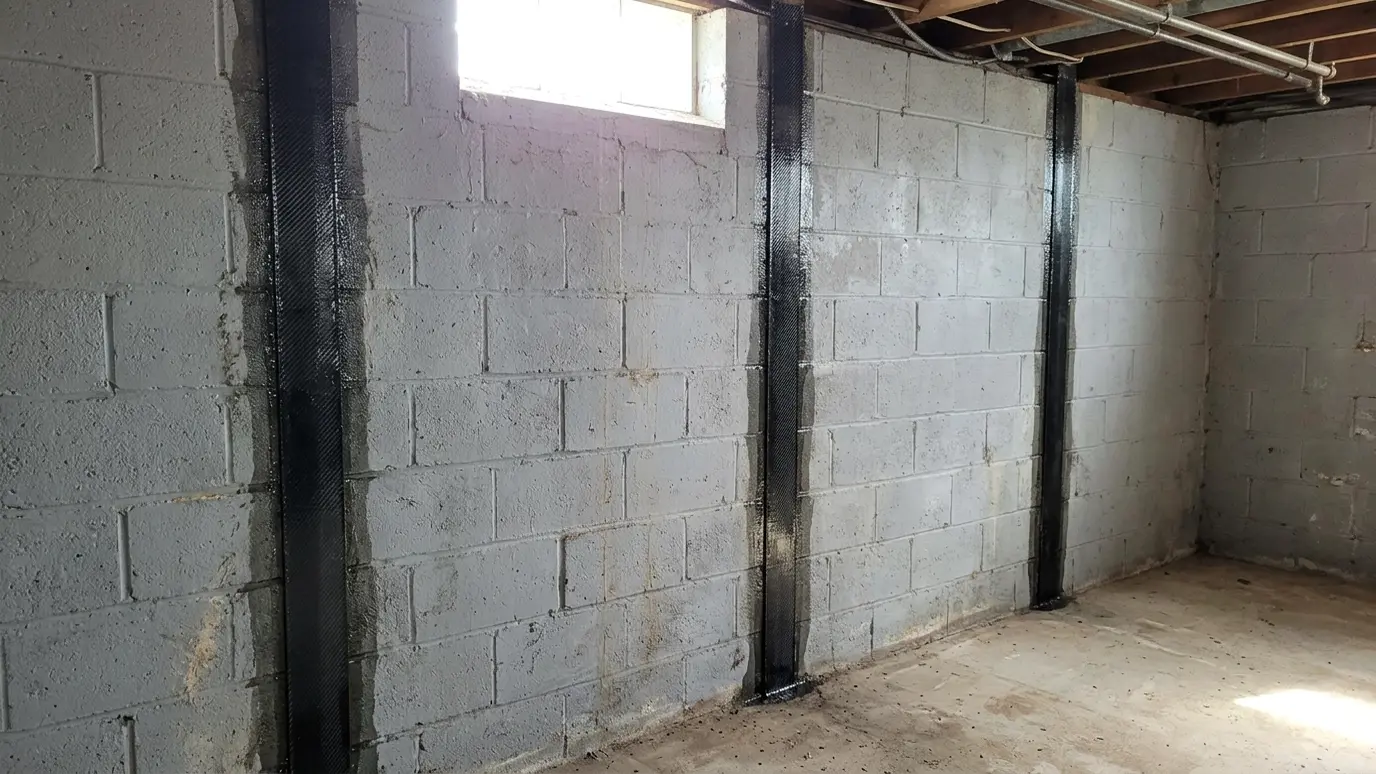
Carbon fiber straps fixed to the wall with epoxy hold it in place and are installed quickly. They suit walls with limited movement.
They do not move the wall back.
Moderate bowing
Steel braces or wall anchors resist further movement. Anchors can be tightened over time to ease a wall back a little.
They need access inside and, for anchors, a clear yard.
Severe bowing
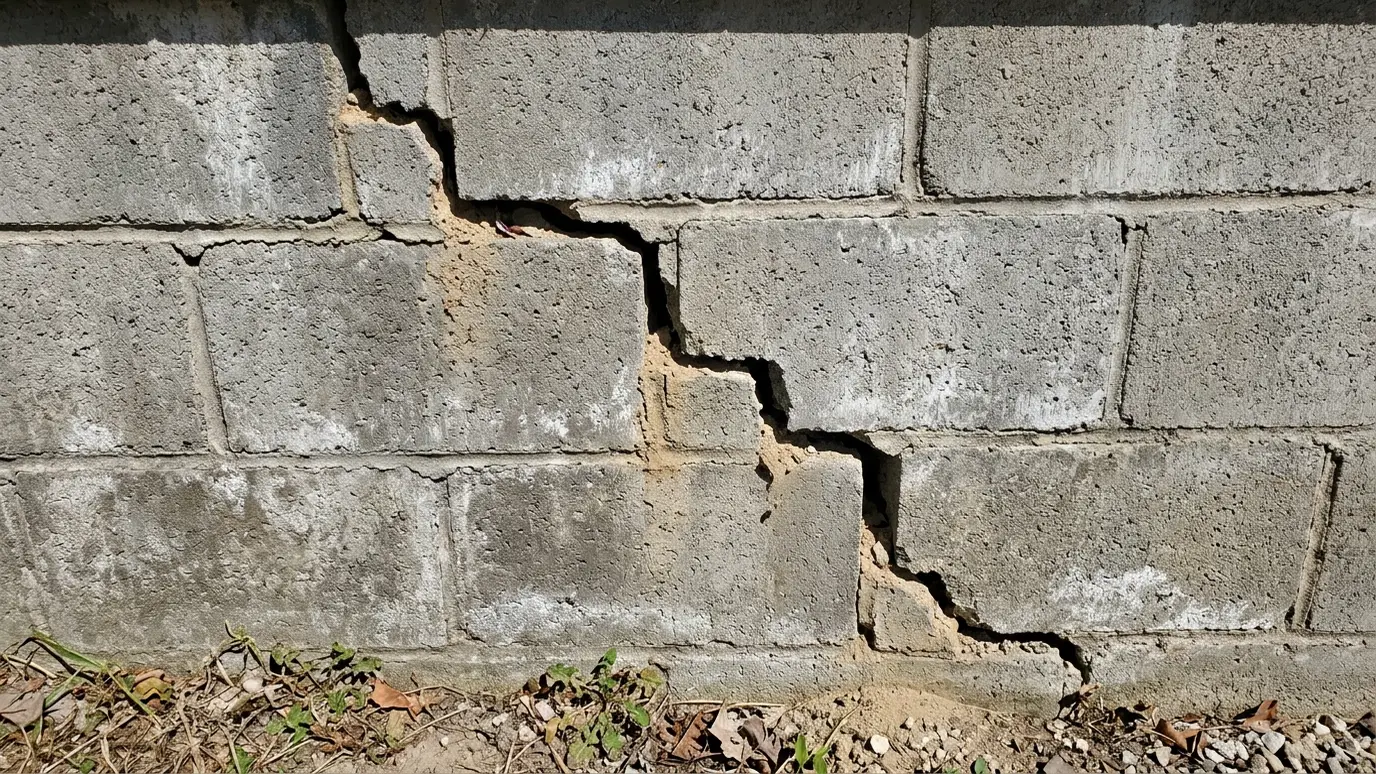
Walls that have moved a lot or cracked through may need partial or full rebuilding with excavation and new support.
An engineer is wise here.
Reduce the pressure
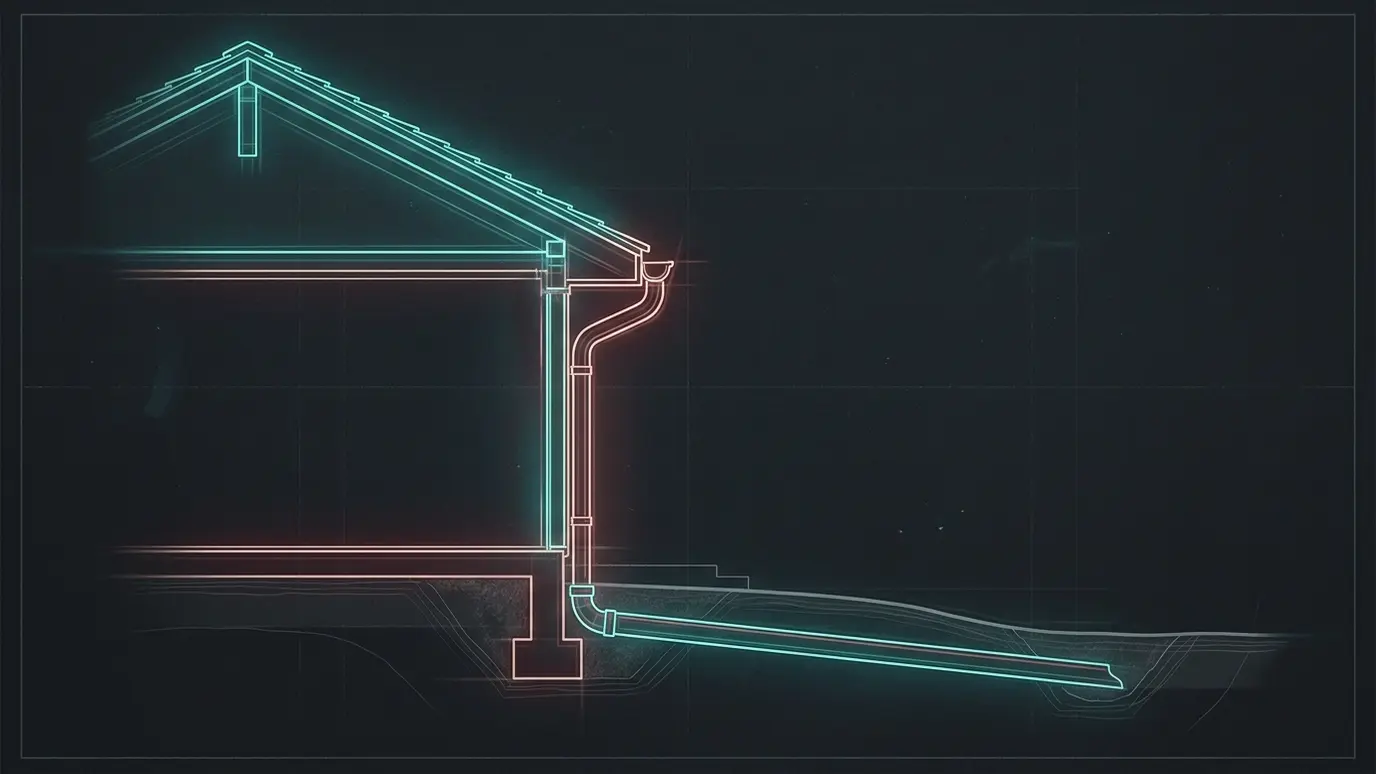
Gutters, grading and drains lower the water load. Any support works better when the pressure is reduced.
Skipping drainage invites the problem to return.
Measure the wall, reduce the water pressure and choose support that matches how far it has moved.