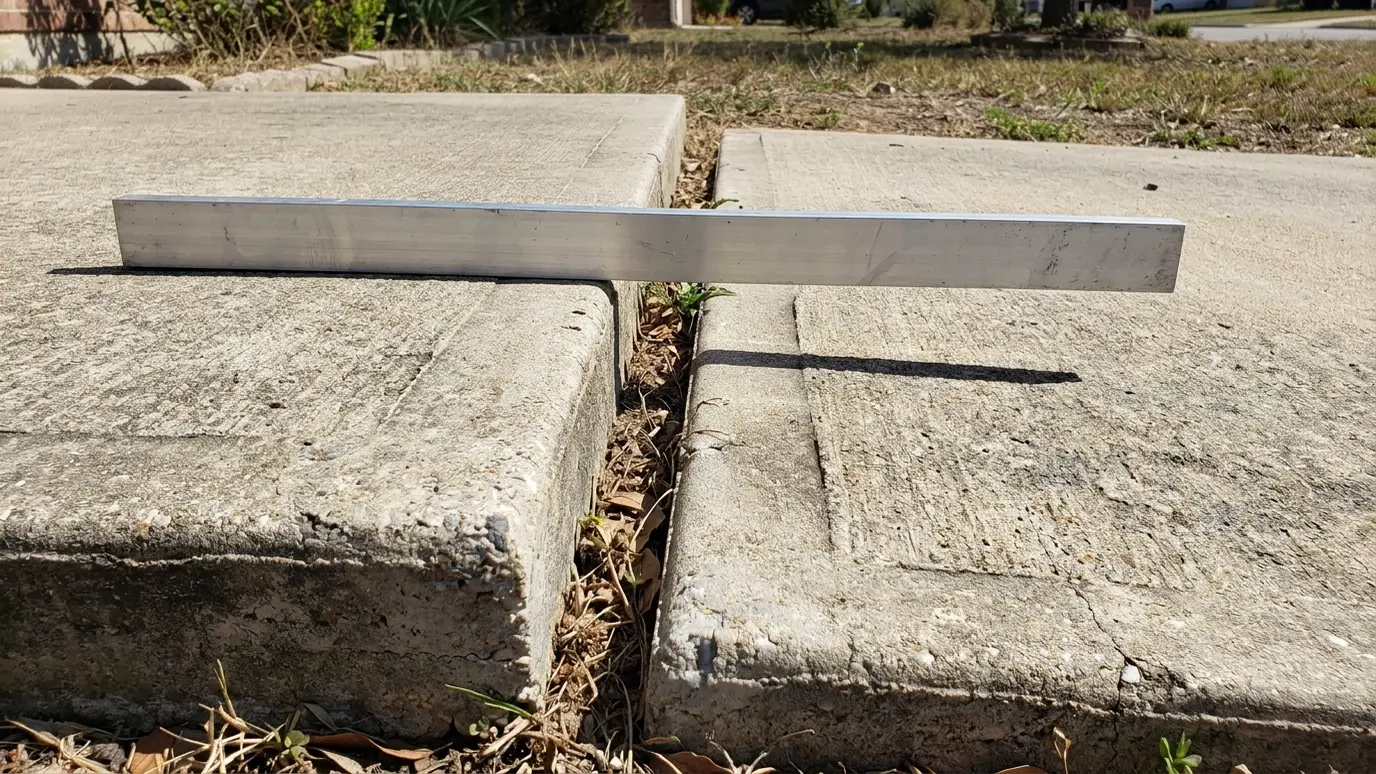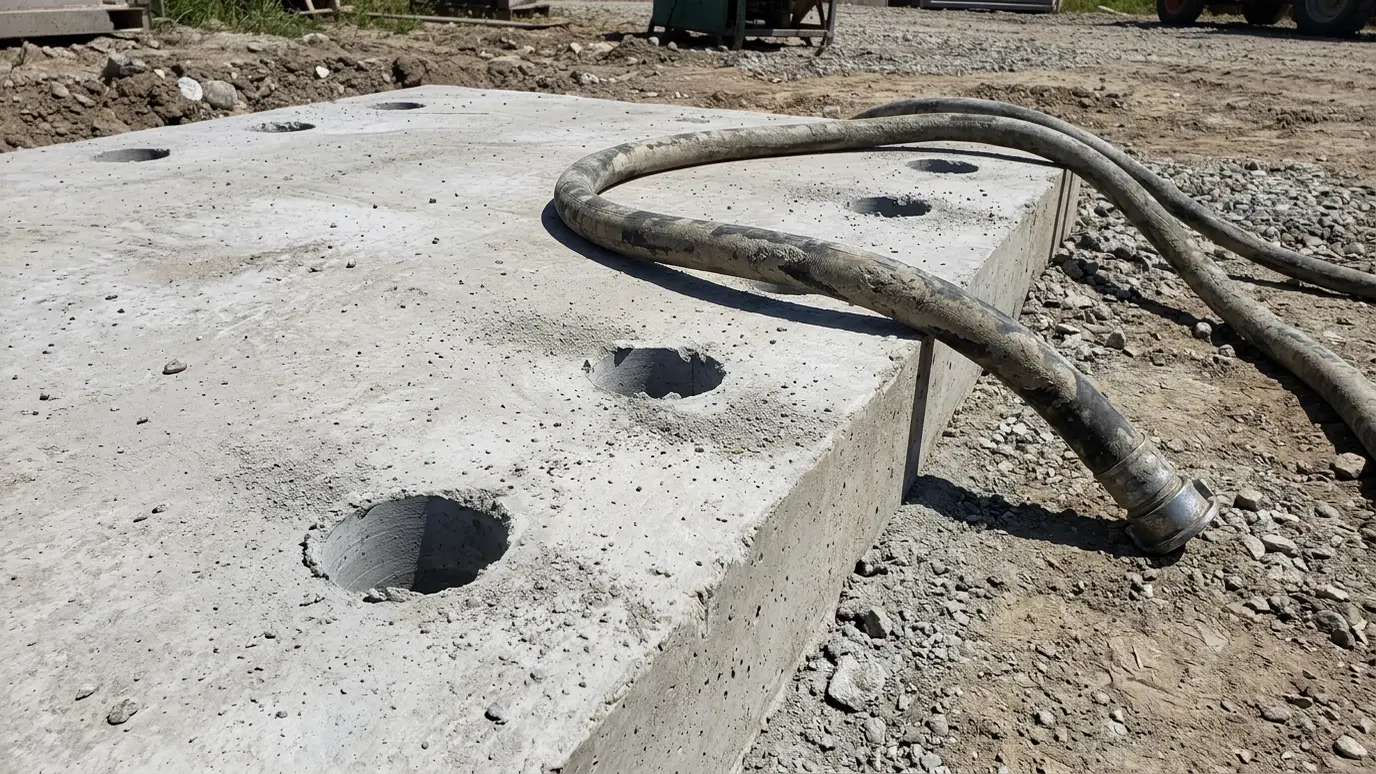
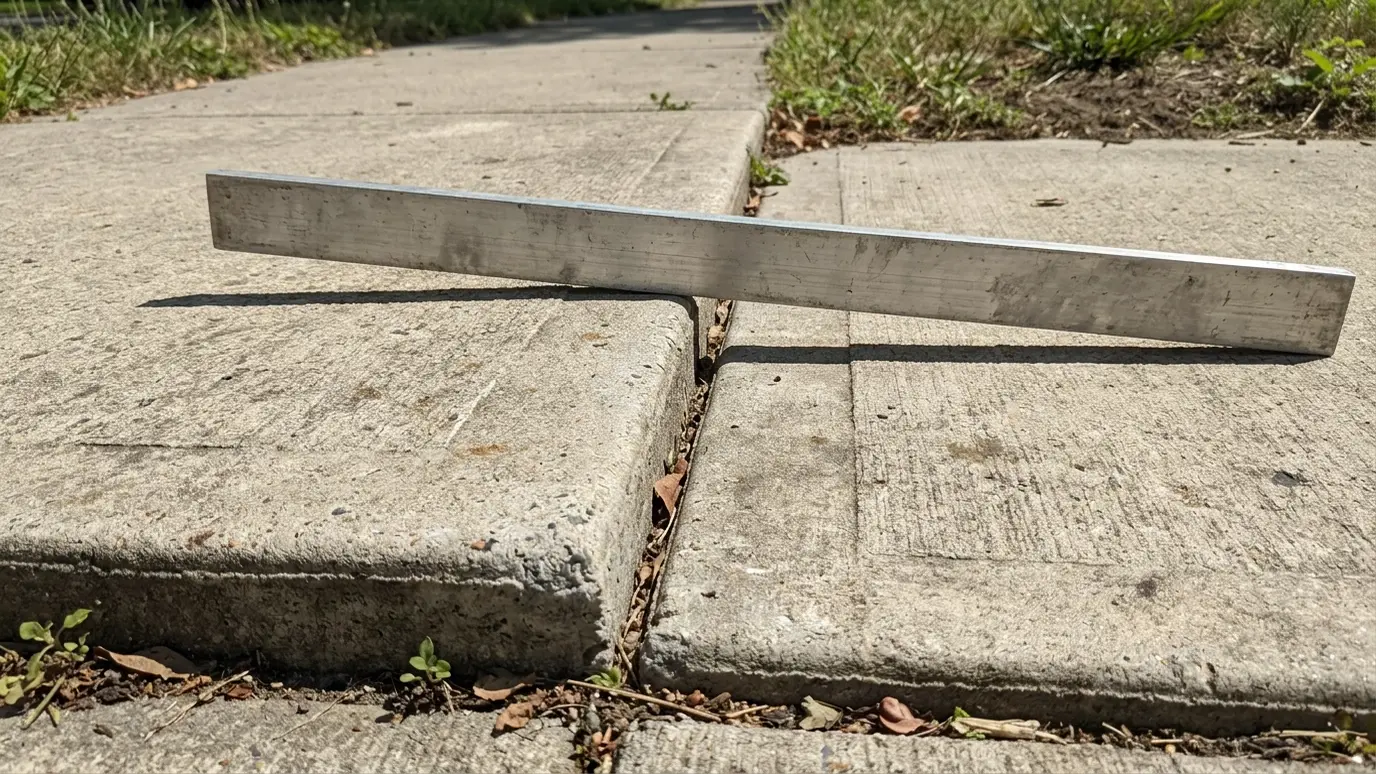
Is the concrete sound?
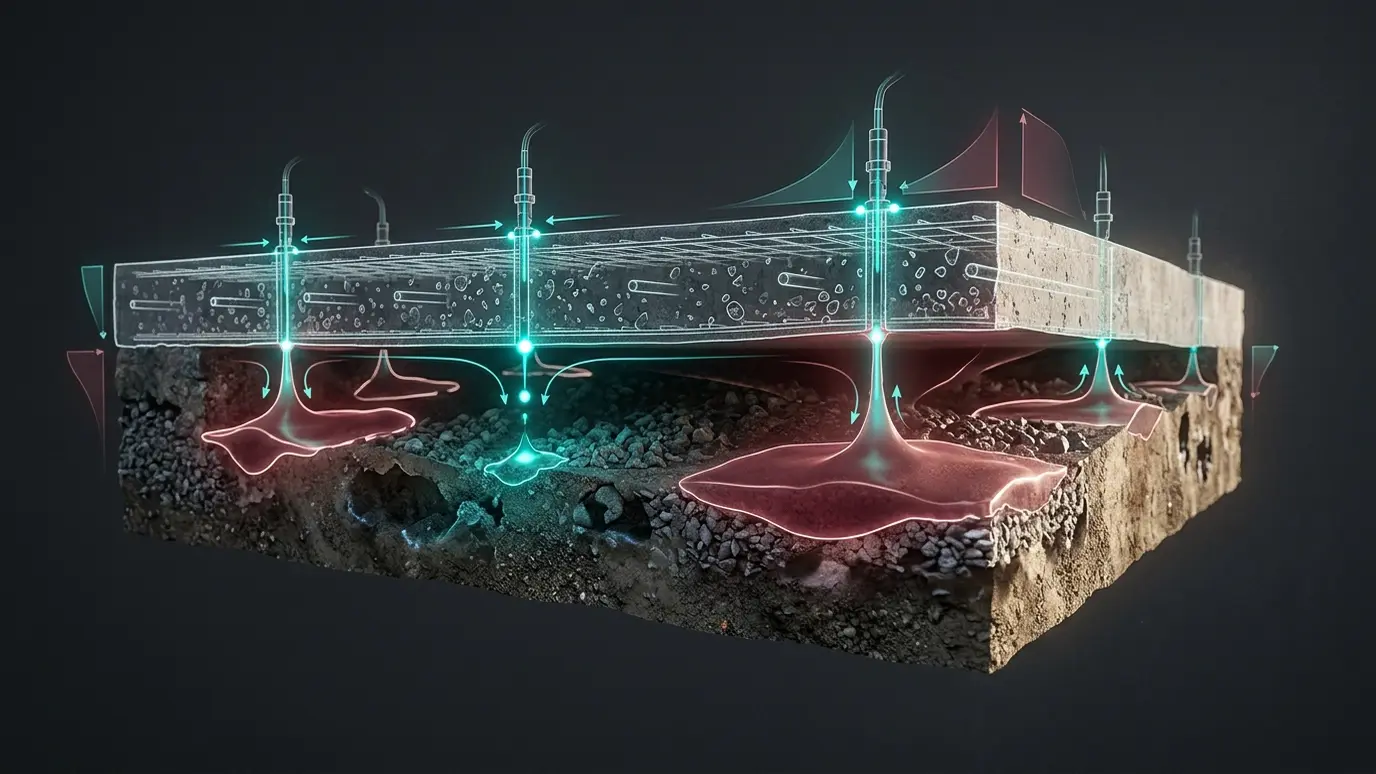
If the slab is intact, with only minor cracks, lifting it is usually quicker and less costly than replacing it.
If it is broken into many pieces or crumbling, replacement is the better choice.
Why did it sink?
If soil washed out or compressed, filling the void and fixing the water fixes the cause. If the soil is deeply unstable, deeper support may be needed.
We look at drainage before we recommend either option.
Time and disruption
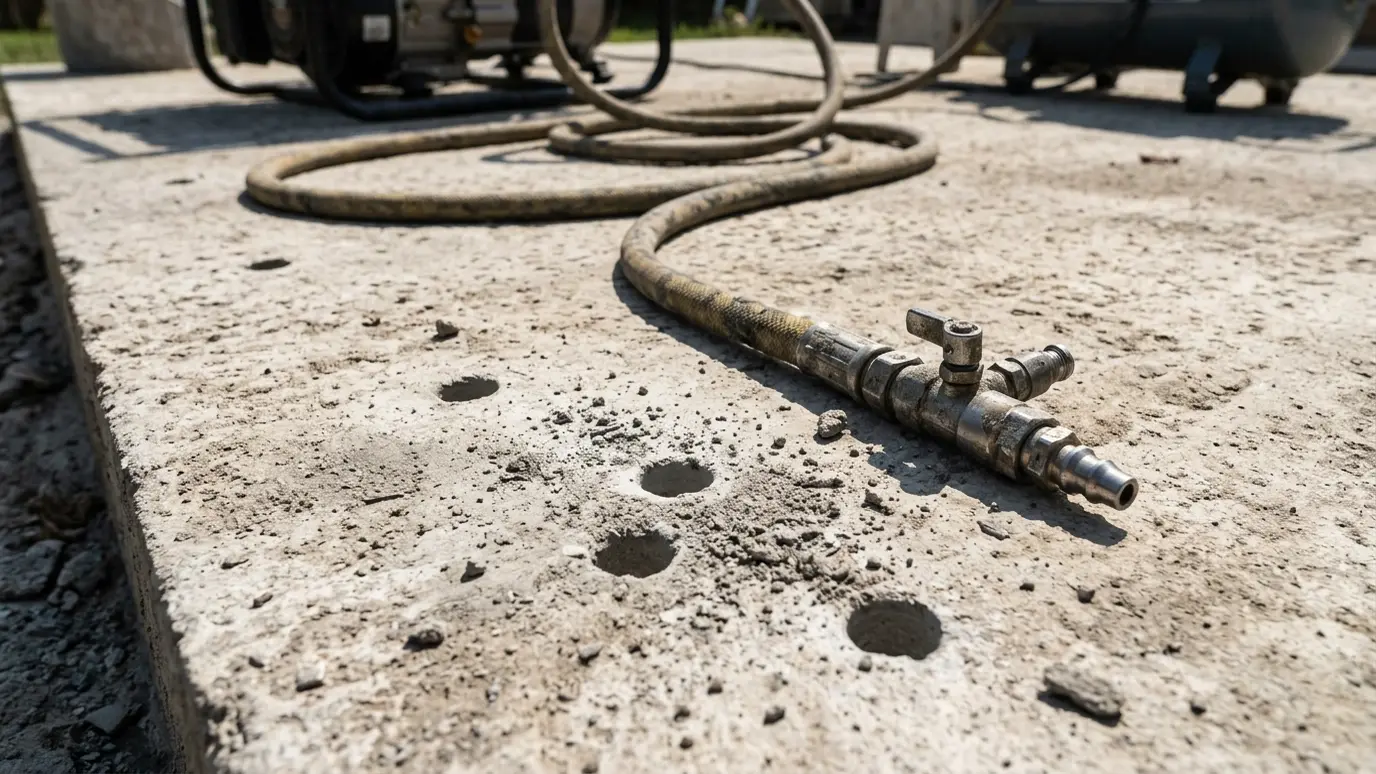
Lifting takes hours and the surface is ready quickly. Replacement means demolition, forms, pouring and days or weeks of cure time.
Replacement also tears up landscaping near the slab.
Appearance
A lifted slab keeps its original color and finish, including stamped or colored concrete that would be hard to match.
Replacement gives a fresh surface but may not match its neighbors.
Cost
Leveling usually costs a fraction of replacement, particularly for large slabs. Prices vary, so ask for a written scope.
Compare what each option includes, such as sealing and drainage.
When replacement wins
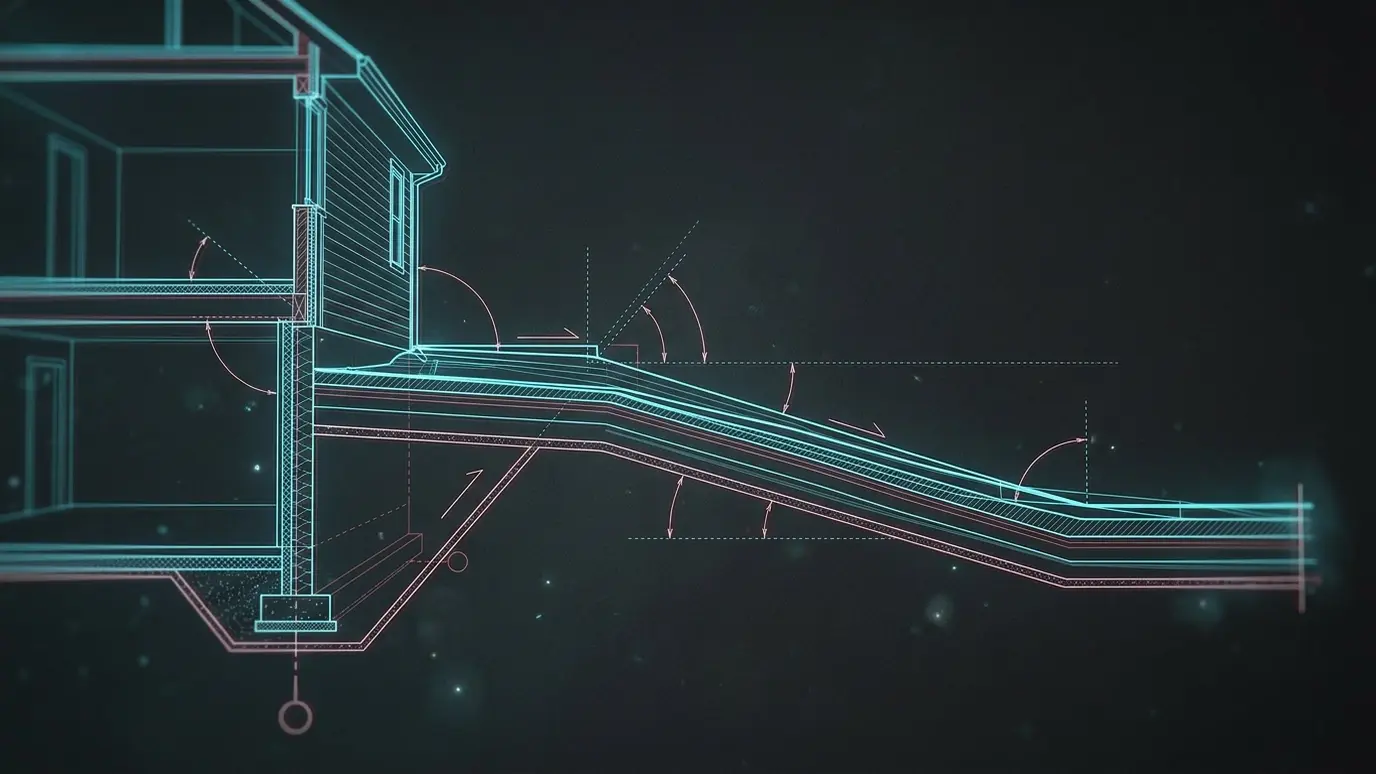
A slab that is badly cracked, spalled or poorly built, or a design change that calls for a new layout, may be better replaced.
We will tell you honestly if lifting is not the right choice.
If the concrete is sound and the cause can be fixed, lift it; if it is broken or you are changing the design, replace it.