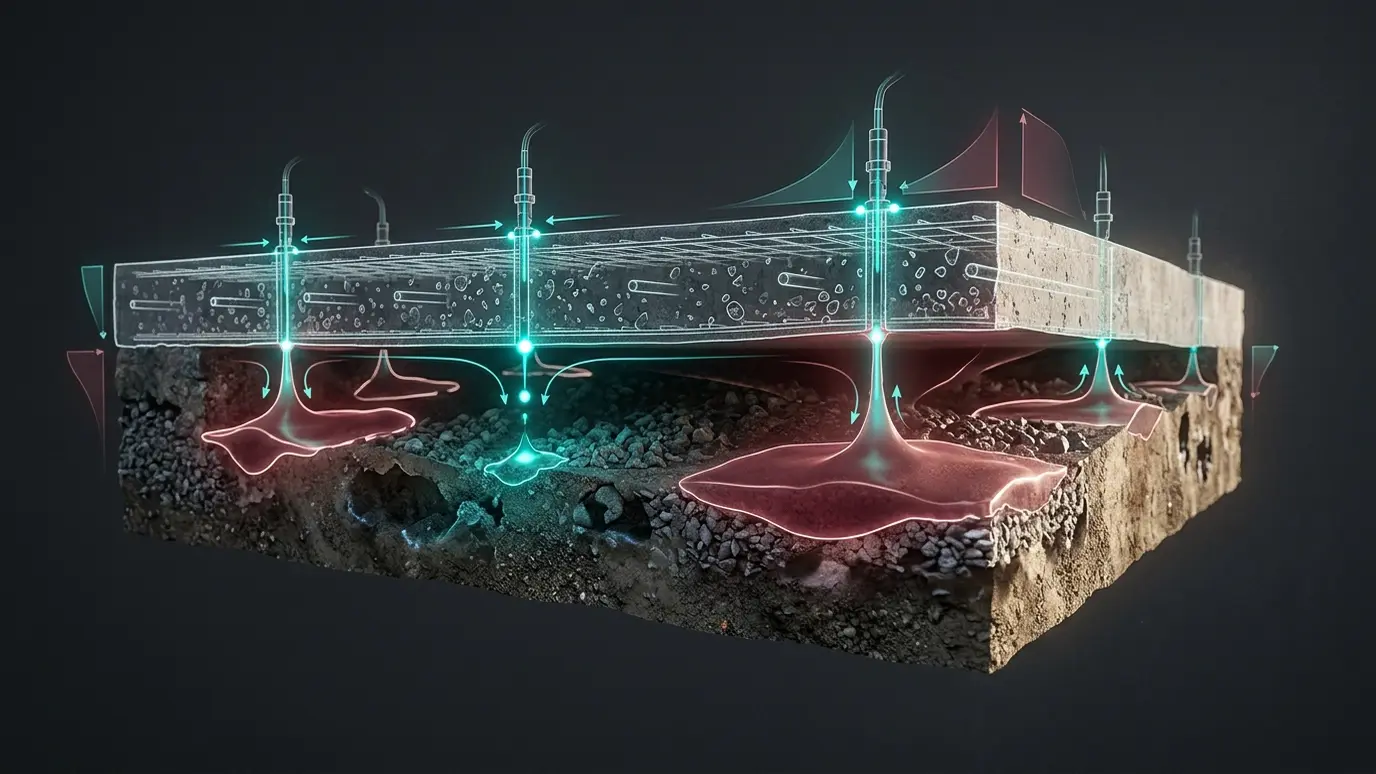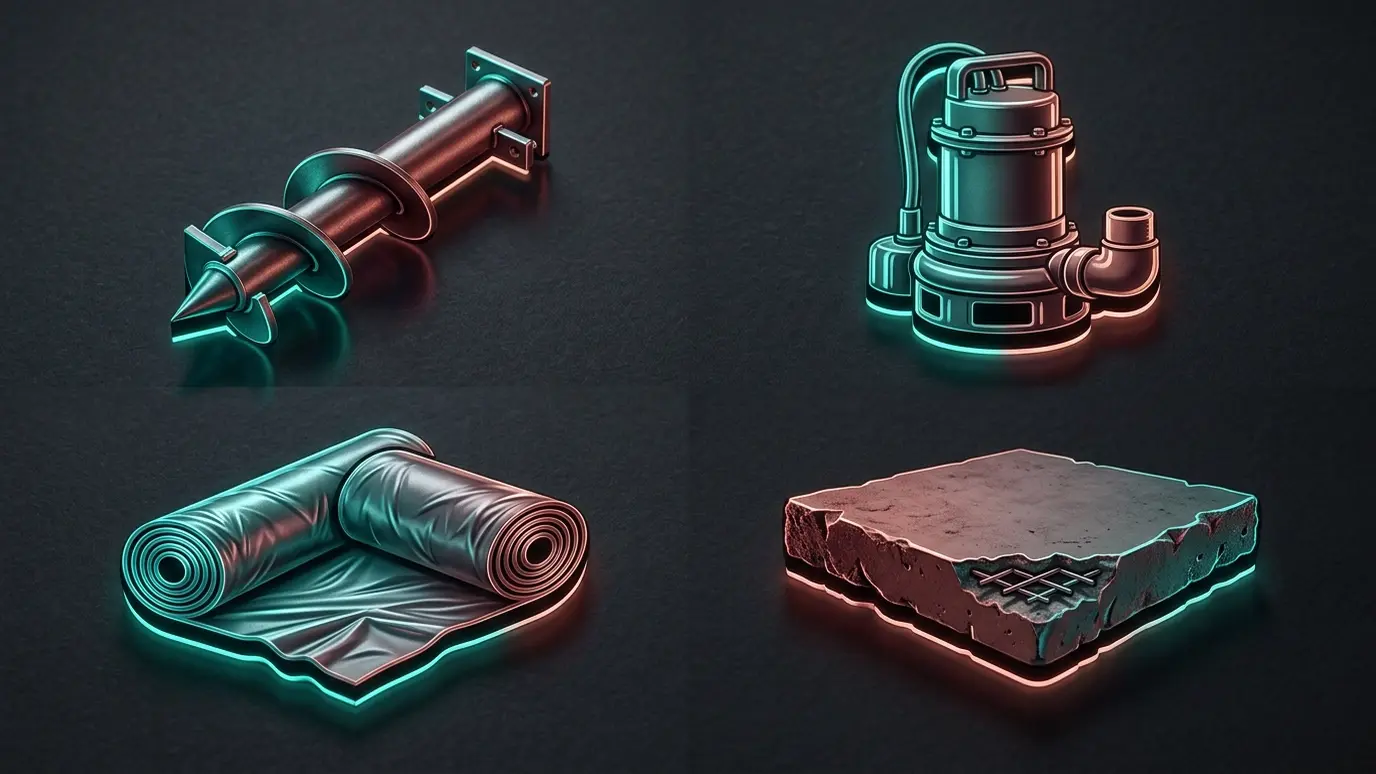
Steel piers driven through weak soil to firm ground carry the footing, stop a sinking foundation and can lift it back toward level.
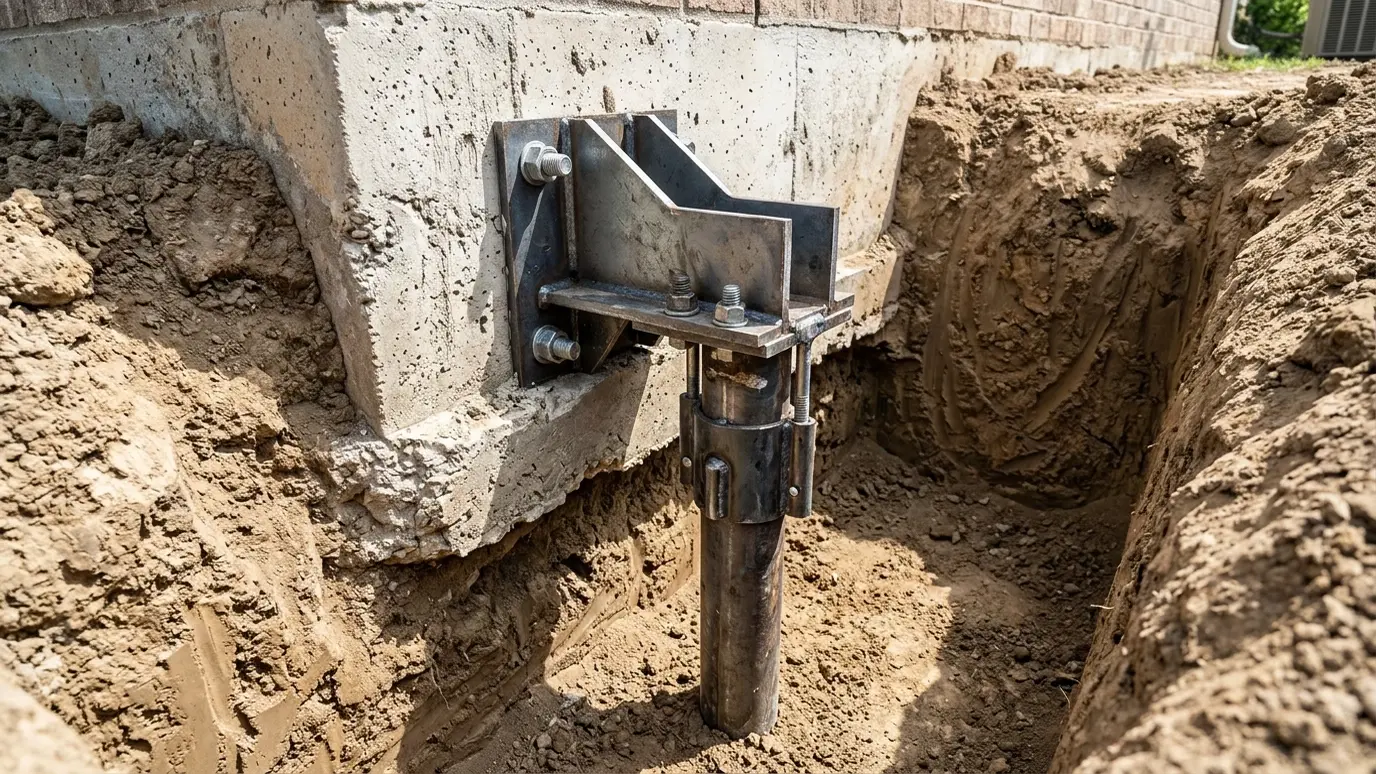
A push pier is a steel tube driven hydraulically through soft or unstable soil until it reaches a layer that can carry the house. A bracket links the top of the pier to the footing, so the weight of the house moves from the weak soil onto the steel. Where the structure allows, the piers are then used together to lift the foundation gradually toward its original height.
Push piers suit houses with enough weight on the footing to drive the steel, which is why they are common on brick and block homes and on larger structures in the Nashville area. We locate piers at the corners and along the walls where the load is highest, test each one as it is driven and keep records. Because the equipment is compact, most pier work is done from the outside with little damage to the yard and no need for large machinery.
Steel sections are pushed down one by one using the weight of the house as resistance, until the load is carried by firm ground.
Piers go where the load is greatest, usually every few feet along the problem wall, with extra at corners and heavy points.
Once all piers are set, a coordinated lift can raise the foundation slowly, easing cracks and sticking doors where possible.
Excavated areas are filled and compacted, and the brackets are protected from moisture.
Drag the handle to compare.
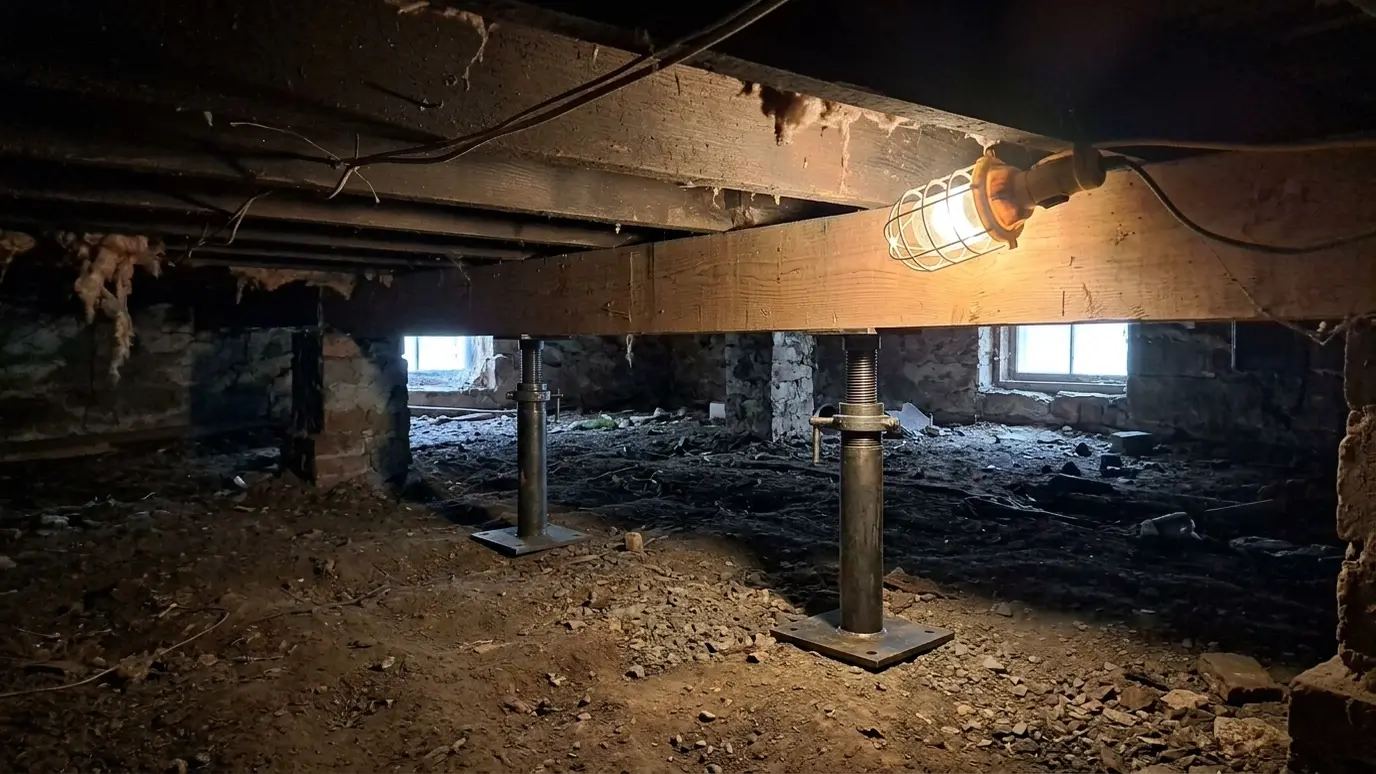
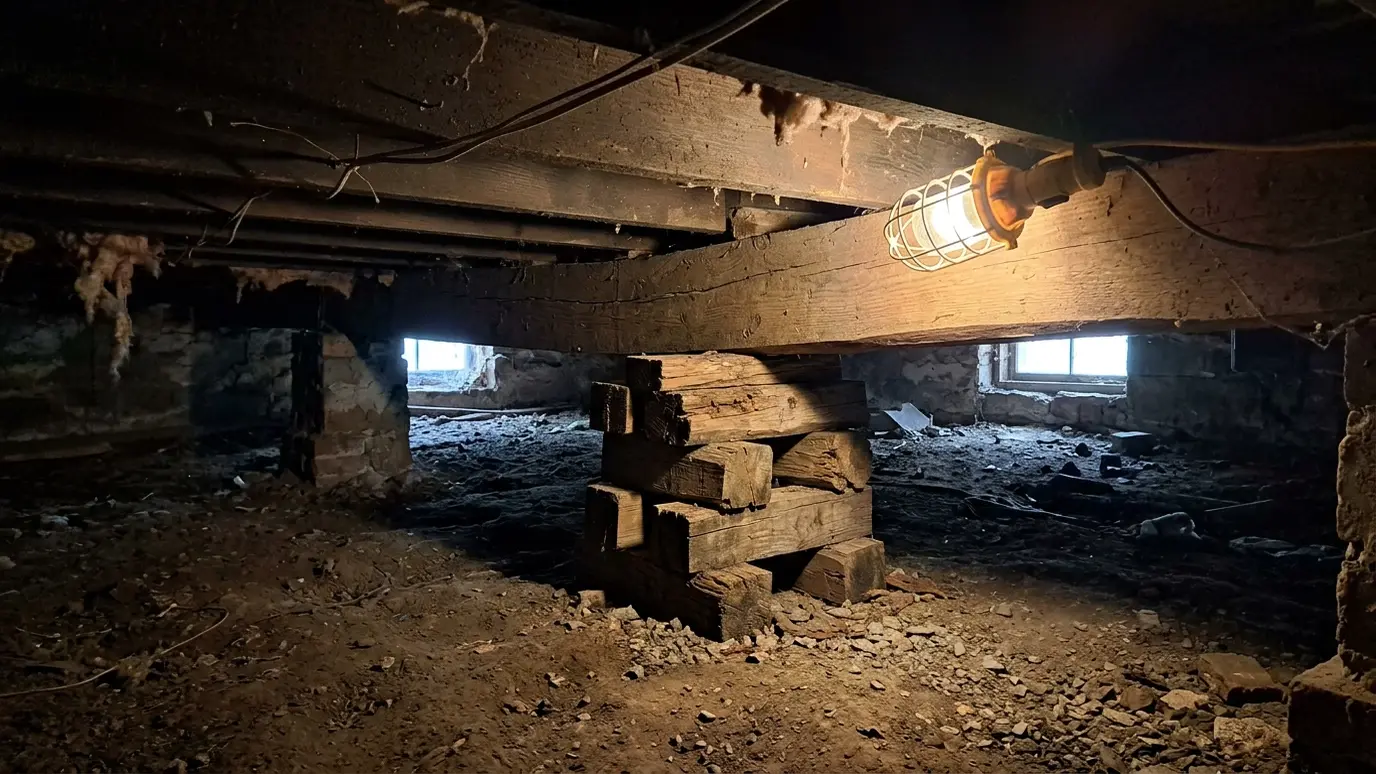 BeforeAfter
Strong support.
Foundation stabilized.
Back toward level.
Gentle on the yard.
Depth and load.
Planned, not guessed.
Every topic has its own page with what to expect and how we approach it.
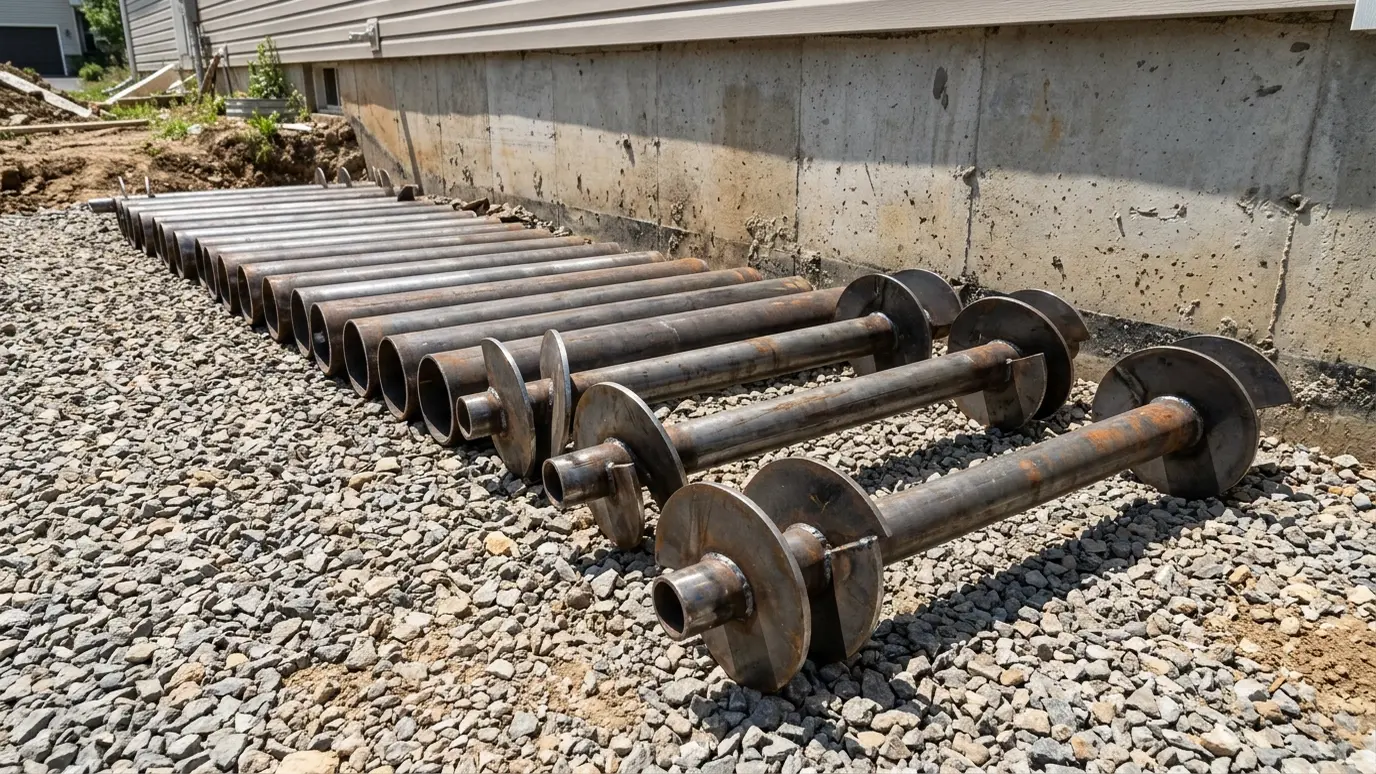 Material guideSteel and Helical PiersSteel piers carry sinking foundations to firm ground. Learn the differences between push piers and helical piers.Learn more
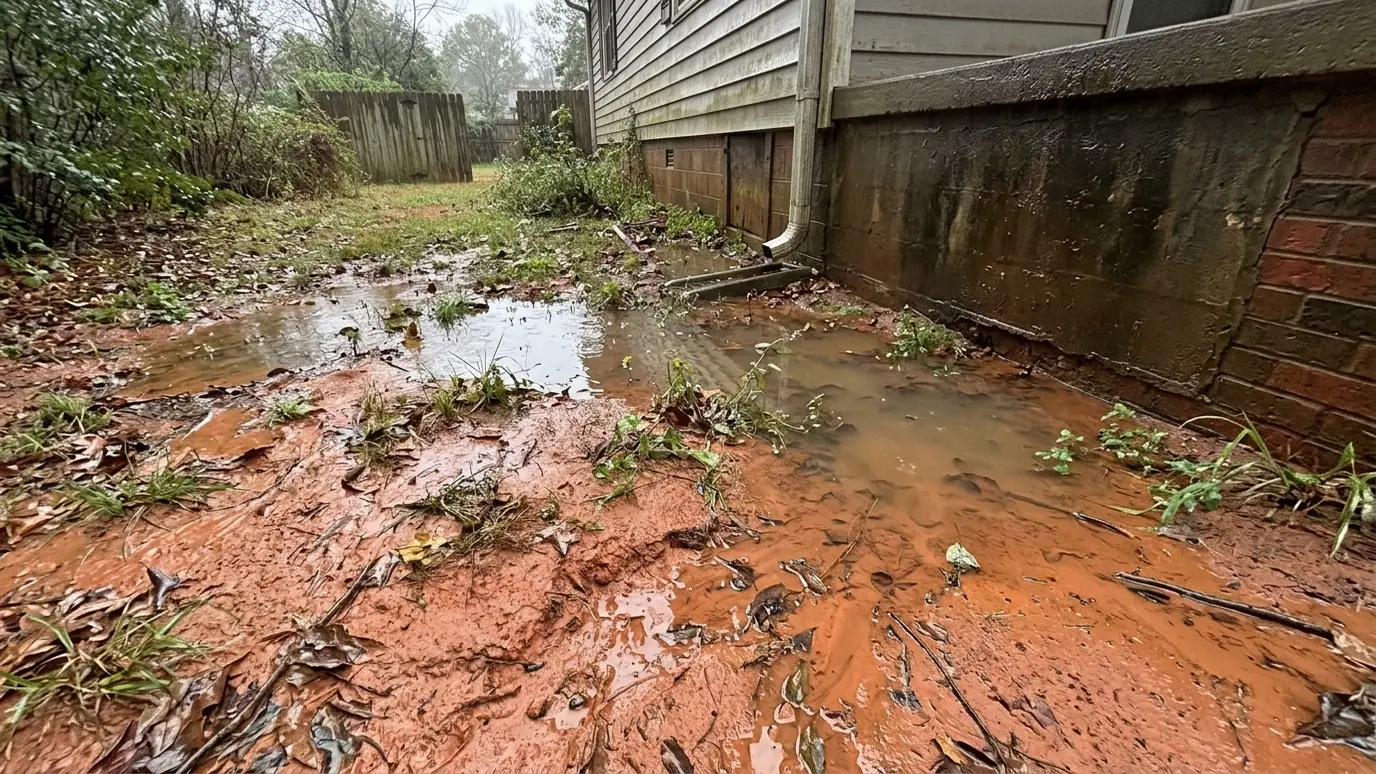 Project situationClay Soil and Wet YardsMiddle Tennessee clay swells when wet and shrinks when dry. That movement is behind many cracks, leaks and…Learn more
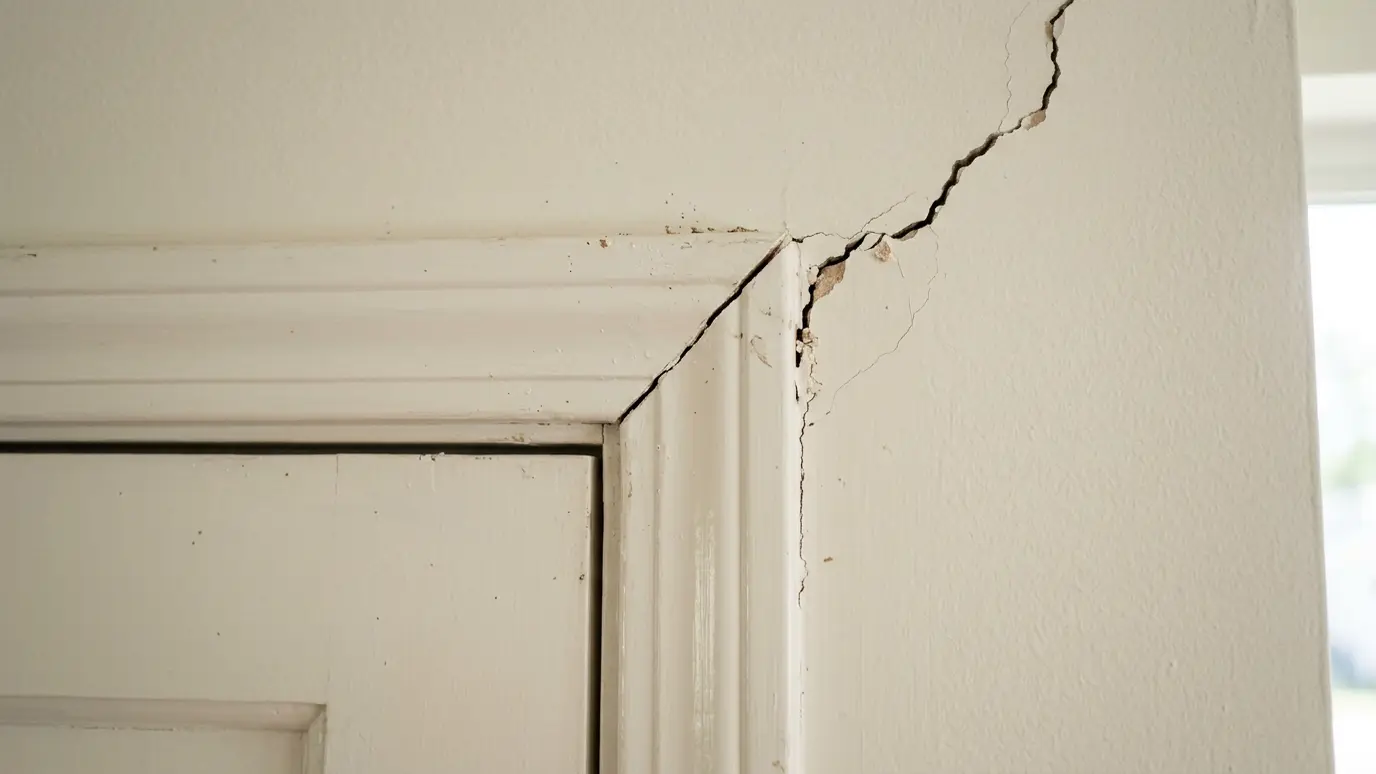 Project situationCracks and Sticking DoorsDoors that stick, cracks over windows and floors that slope are the signals foundations send. Learn what they…Learn more
Pick the crack type, measure its width and tell us if it is changing to see how much attention it may need.
You tell us what you have noticed, a crack, a damp smell, a sloping floor or standing water, and we set a visit that fits your day.
We look closely inside and out, measure floors and cracks, check moisture and drainage and take photos of anything of note.
We explain what is urgent, what can wait and what is optional, and give you a written scope and options.
We lay floor protection, mark utilities, protect landscaping and set up before any digging or drilling begins.
We install, seal, lift or repair with the right tools and materials, checking our work as we go.
We clean up, restore the surface, show you what we did, share care tips and set a reminder for your next check.
They go until they reach firm soil or rock, which varies by site. Depths are recorded as they are driven.
Push piers are driven using the weight of the house. Helical piers are screwed in, which suits lighter structures.
No. After backfilling they are below ground, apart from small covers where they meet the wall.
Often, within the limits of the structure. Lifting is gradual and watched closely.
Many are done in a few days, depending on how many piers are needed.
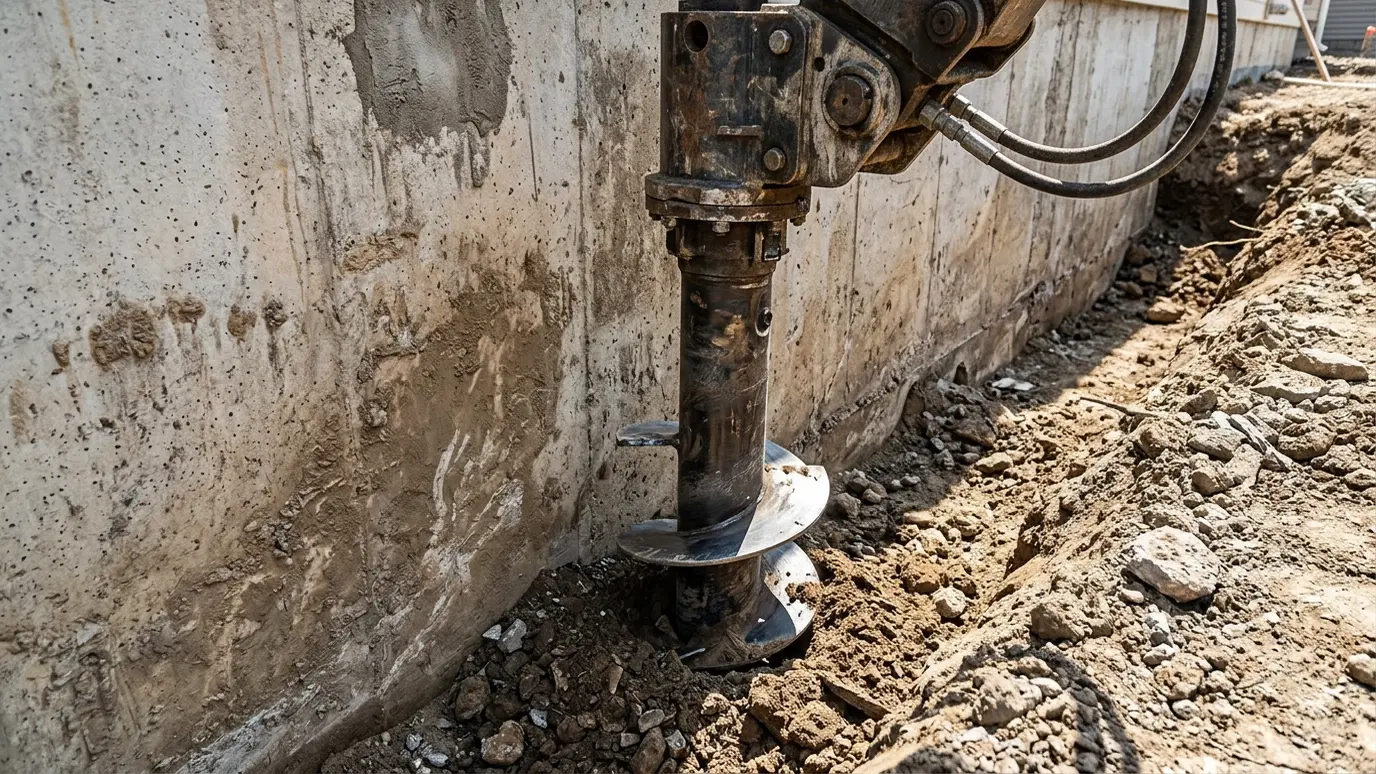 Helical PiersSteel shafts with screw plates are turned into the ground to stable soil, ideal for lighter structures, porches…Explore
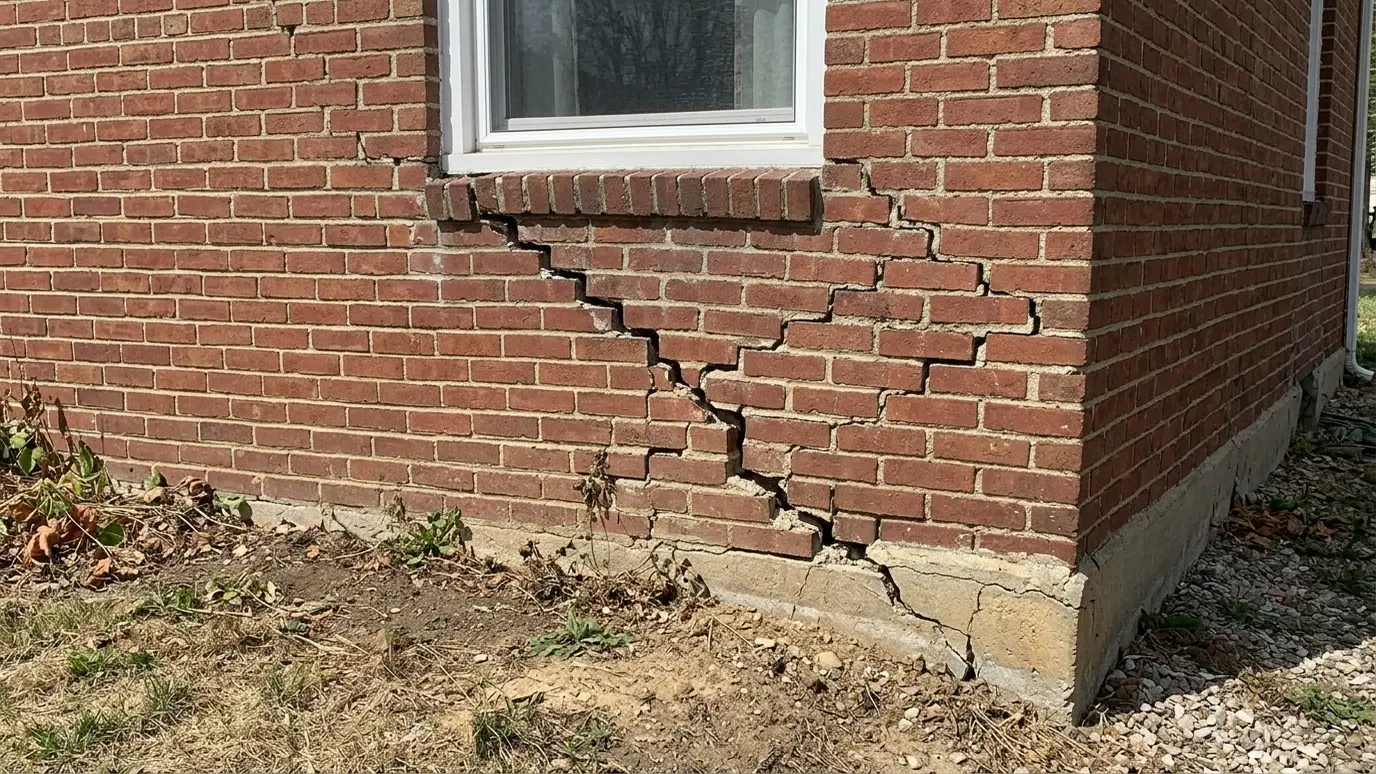 Foundation Settlement RepairSloping floors, sticking doors and cracks above windows can mean a corner is sinking. We find the cause…Explore
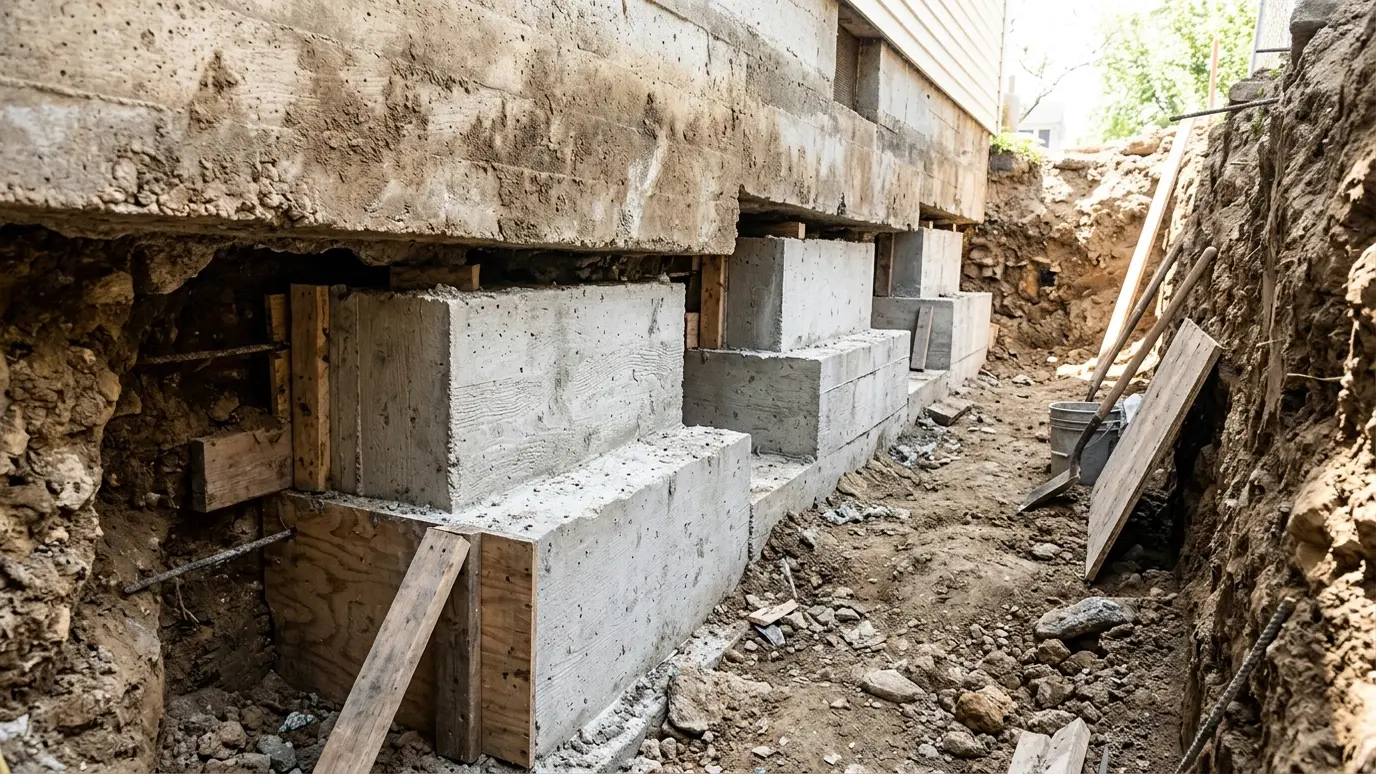 Foundation UnderpinningUnderpinning carries a footing down to stronger soil so a sinking or overloaded foundation can rest on something…Explore
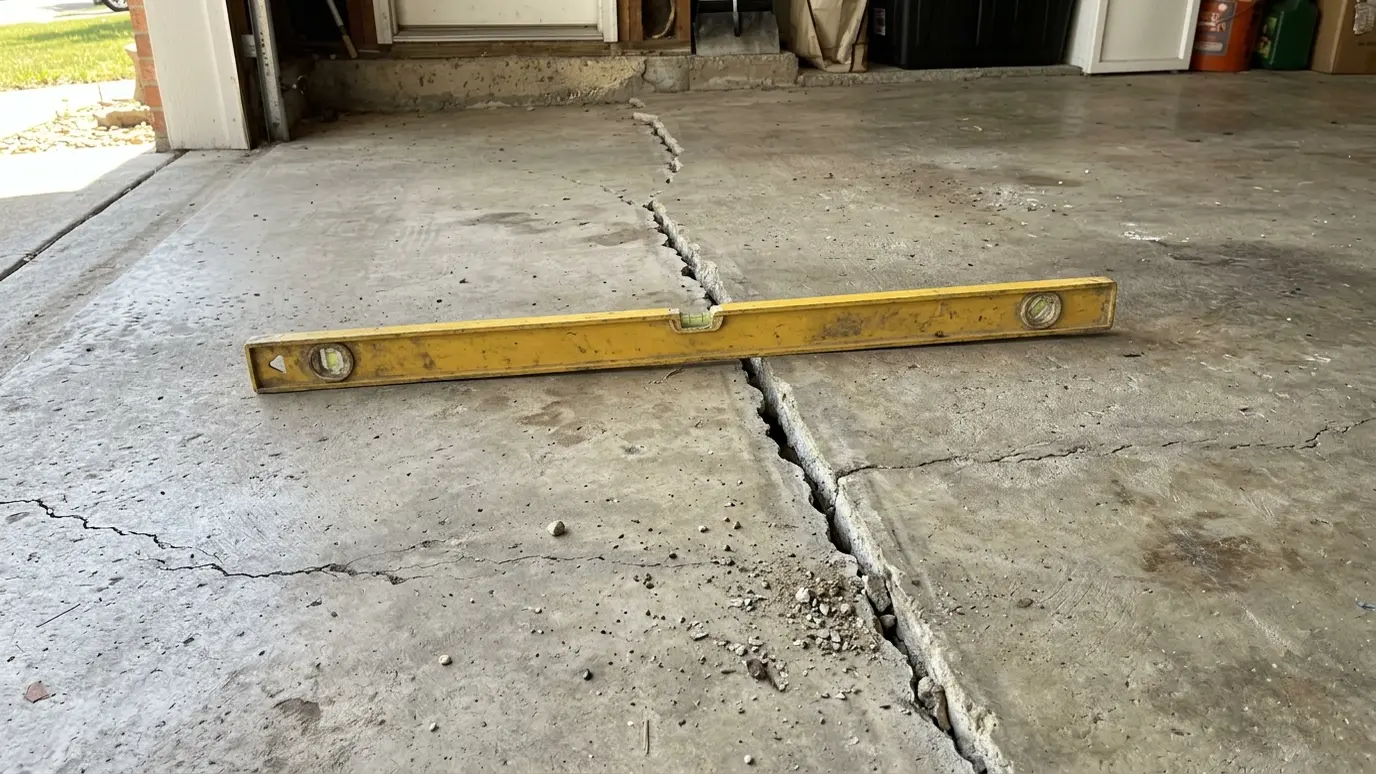 Slab Foundation RepairSlab foundations crack, settle and heave. We repair the slab, stabilize what is under it and fix the…Explore
Tell us about the project and we will call you back to talk it through.
Or call (615) 357-7797 to talk now.