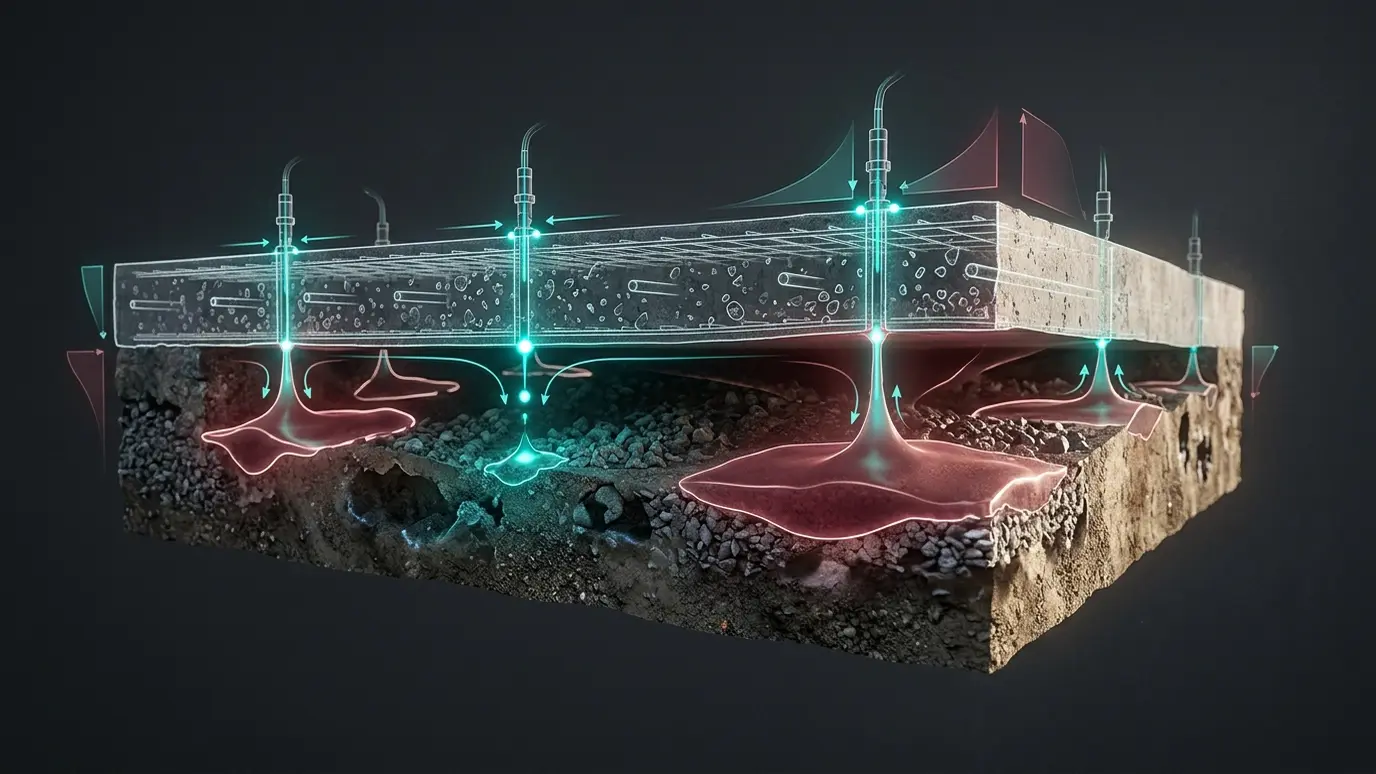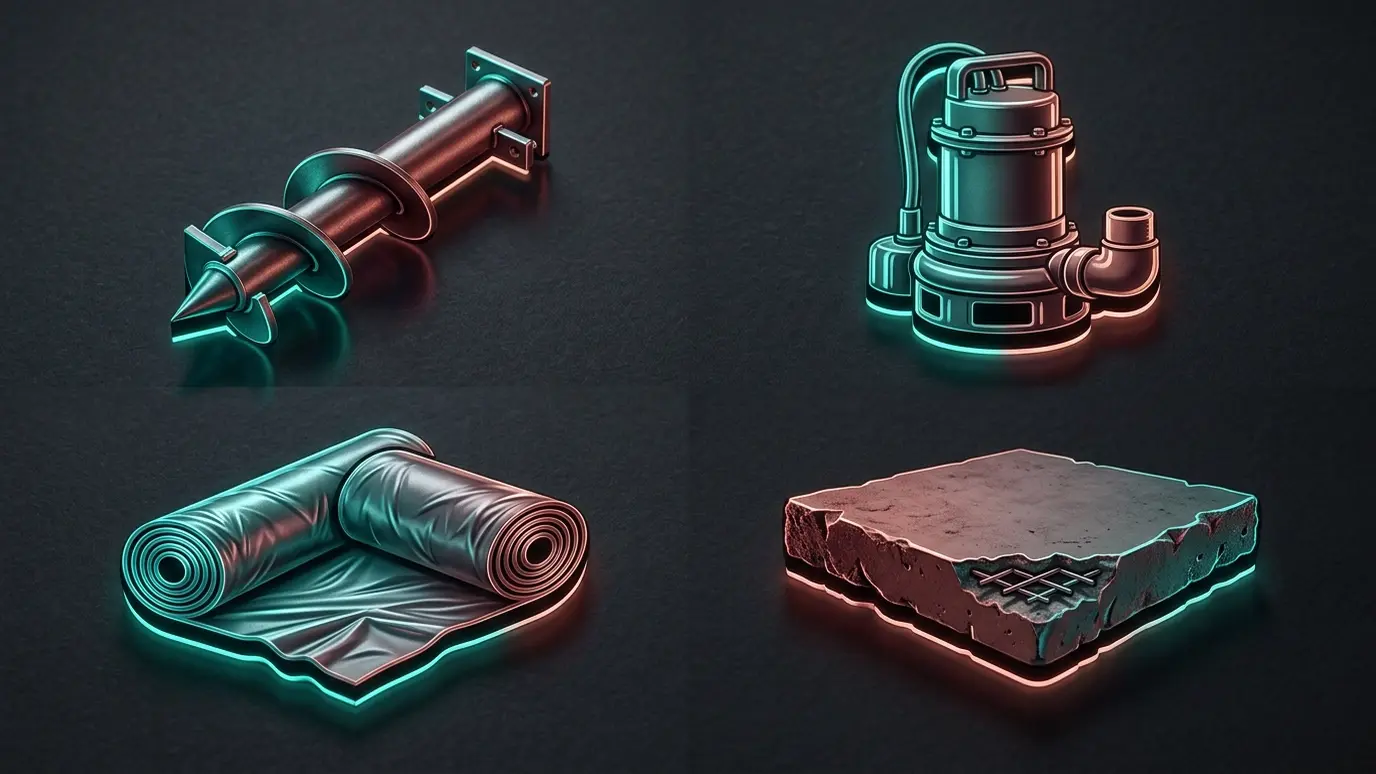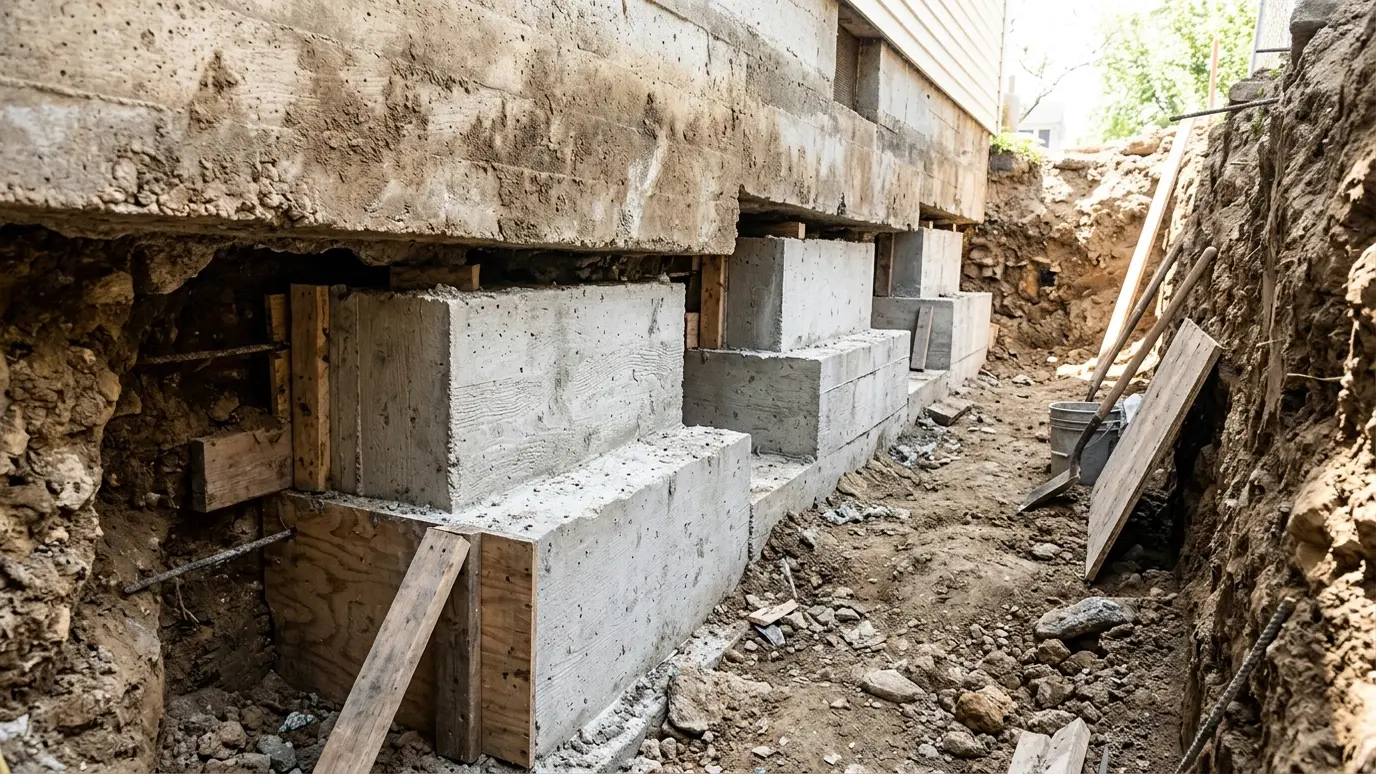
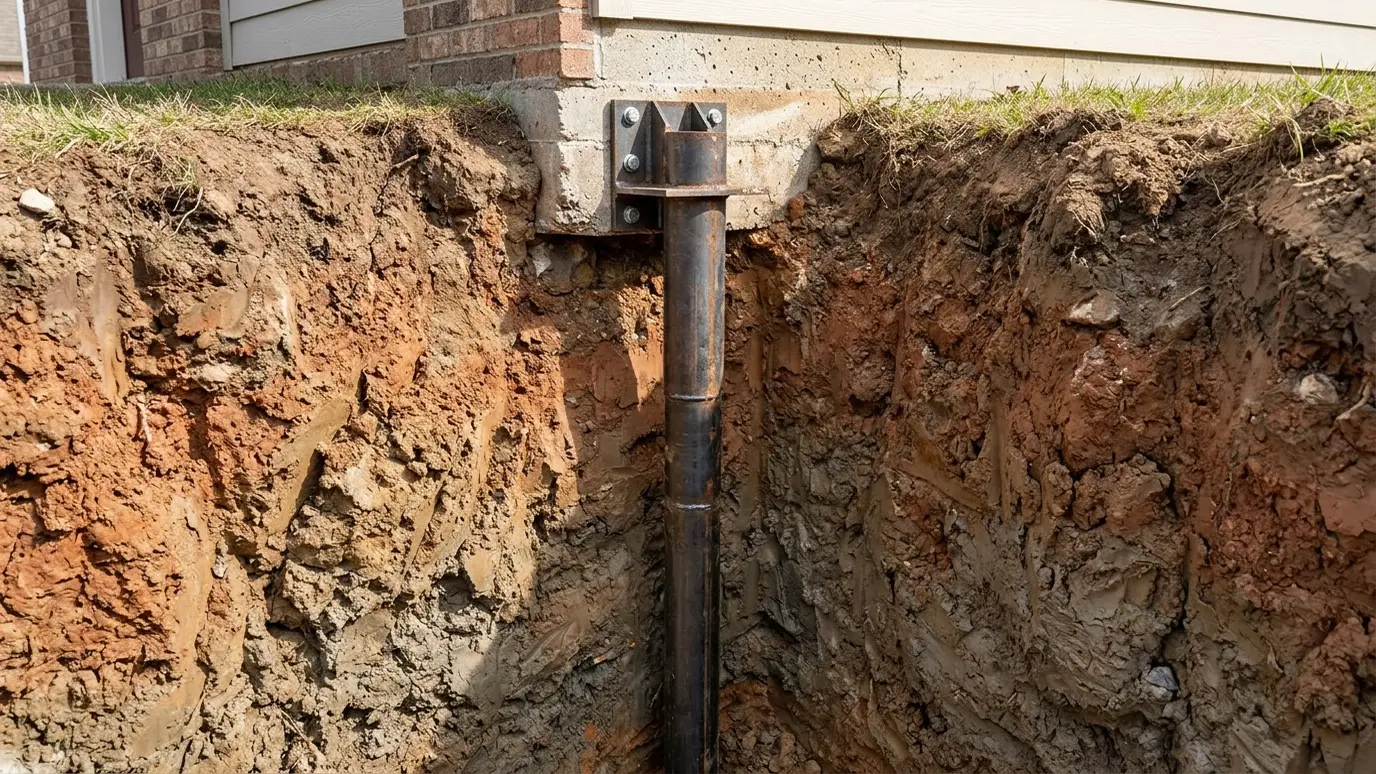
The goal is the same
Both reach through weak soil to firm ground and carry the footing on steel. The difference is how they get there.
Each can stabilize a sinking foundation and, in many cases, lift it.
Push piers
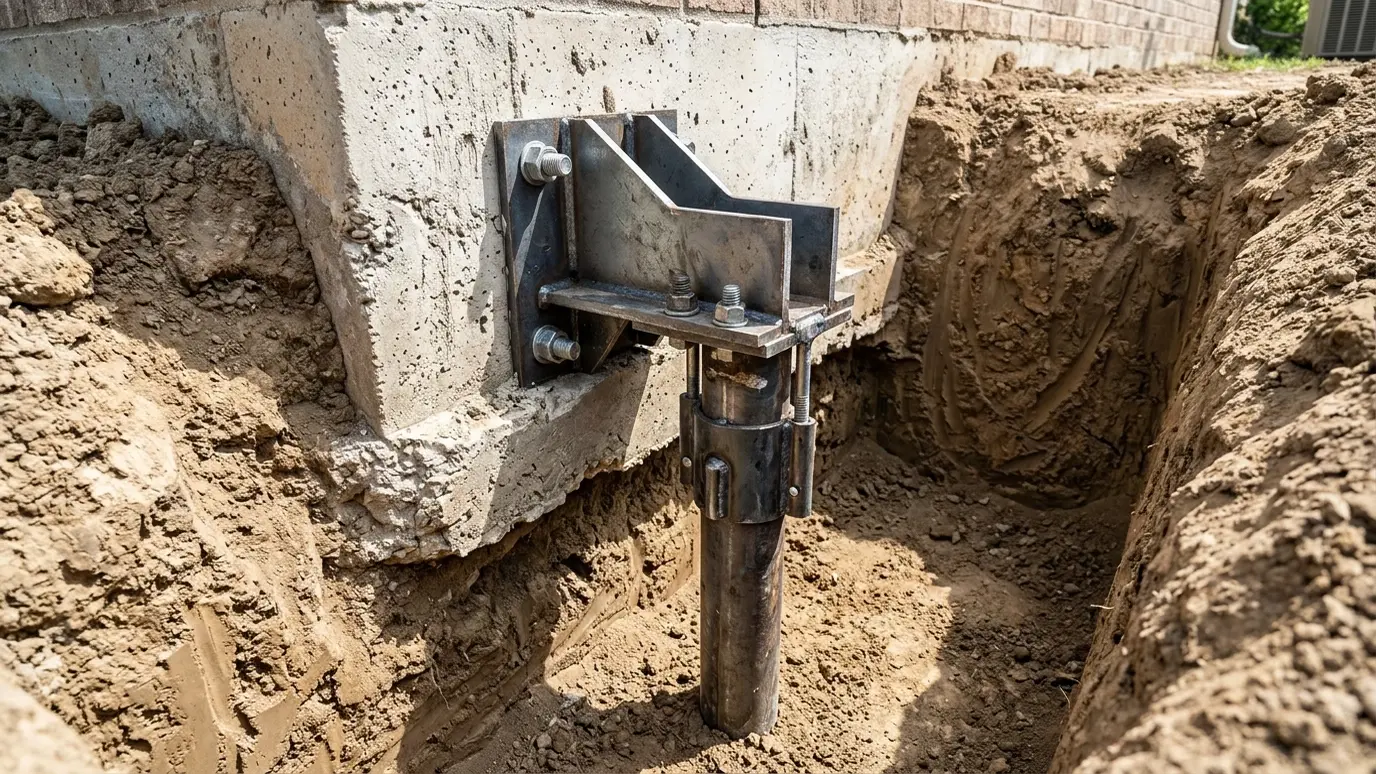
Hydraulic rams drive steel tubes down using the weight of the house as resistance until they reach firm ground.
They suit heavier structures such as brick and block homes and can lift them gradually.
Helical piers
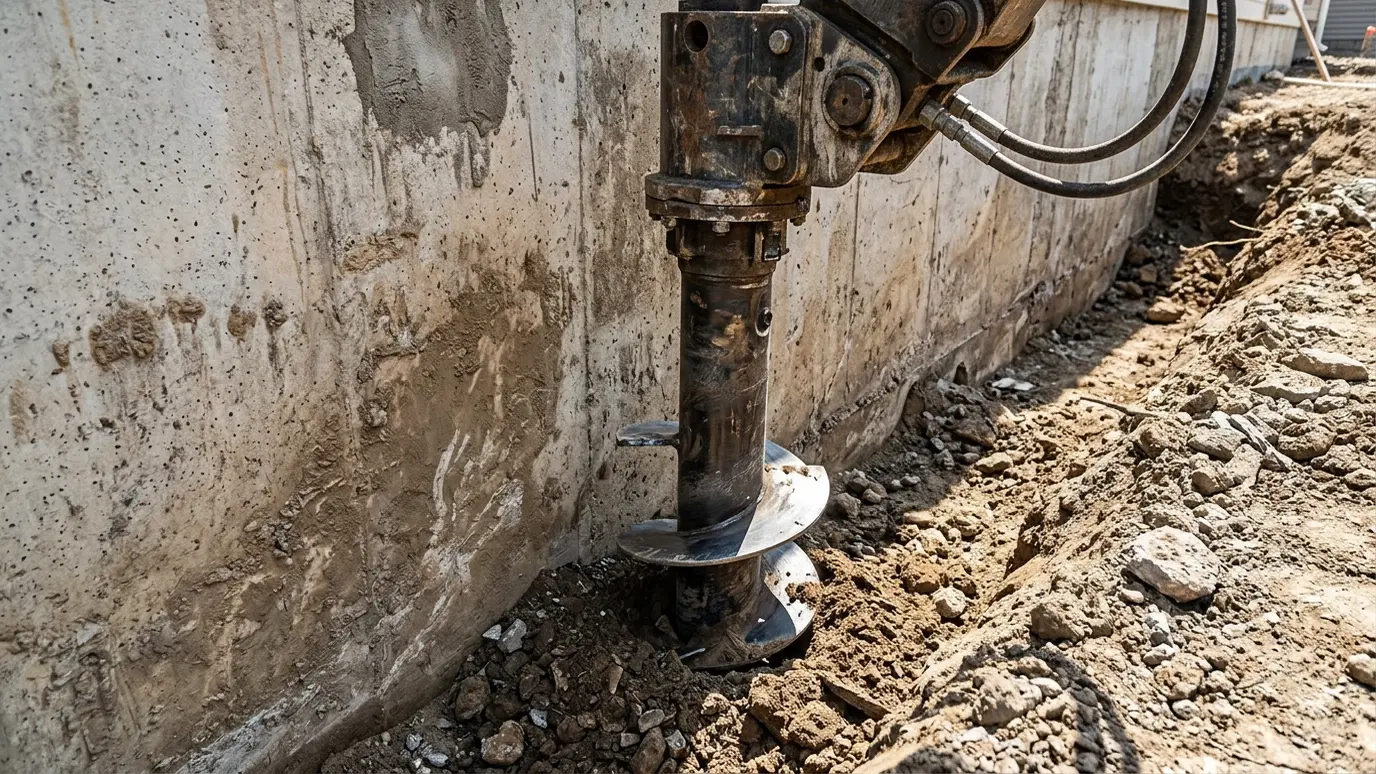
A shaft with screw plates is turned into the ground by a hydraulic motor. Torque readings show the capacity.
They suit lighter structures, porches, additions and sites with little weight to push against.
Soil and depth
Soil conditions decide how deep each pier must go. Both types can be extended to reach a stable layer.
Local experience with the soil matters.
Access and equipment
Both use compact equipment. Helical piers can often be installed from small spaces, including crawl-space openings.
We choose a method that fits your site.
Records and engineering
Ask for records of depth and torque or driving pressure, and, for larger jobs, an engineer-approved layout.
Records show each pier reached good support.
Choose the pier that matches your structure and soil, and insist on a layout, records and a clear explanation.