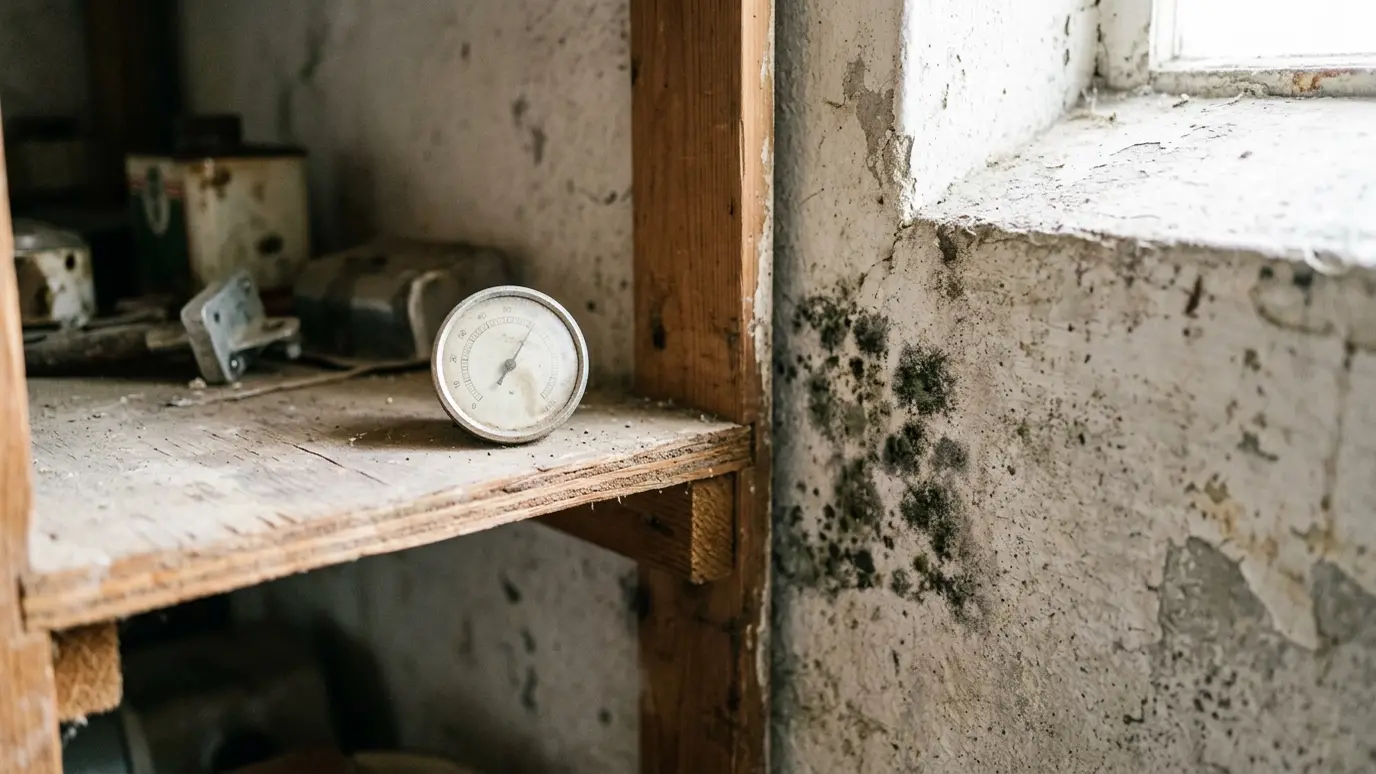
Humidity drives mold
Mold needs moisture, food and time. Basements and crawl spaces provide all three, and humidity is the part you can control.
Keeping humidity low removes the moisture mold needs.
What to measure
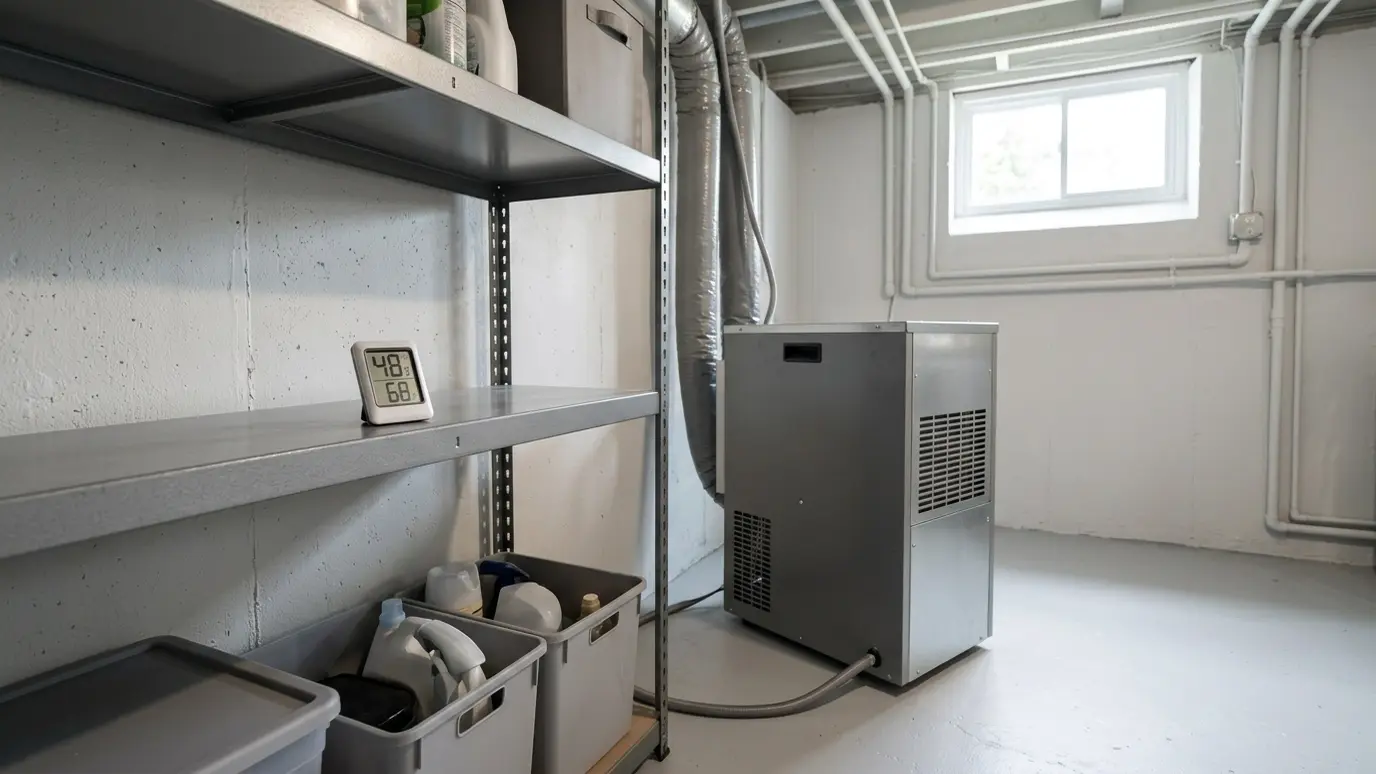
A small hygrometer shows relative humidity. Many people aim to stay below about sixty percent, and lower where mold has been a problem.
Check readings at different times, since humidity swings by day and season.
Common sources
Bare soil, leaks, condensation on cool pipes and walls, open vents in humid weather and wet laundry drying indoors all add moisture.
Our humidity tool helps you find yours.
Dehumidification
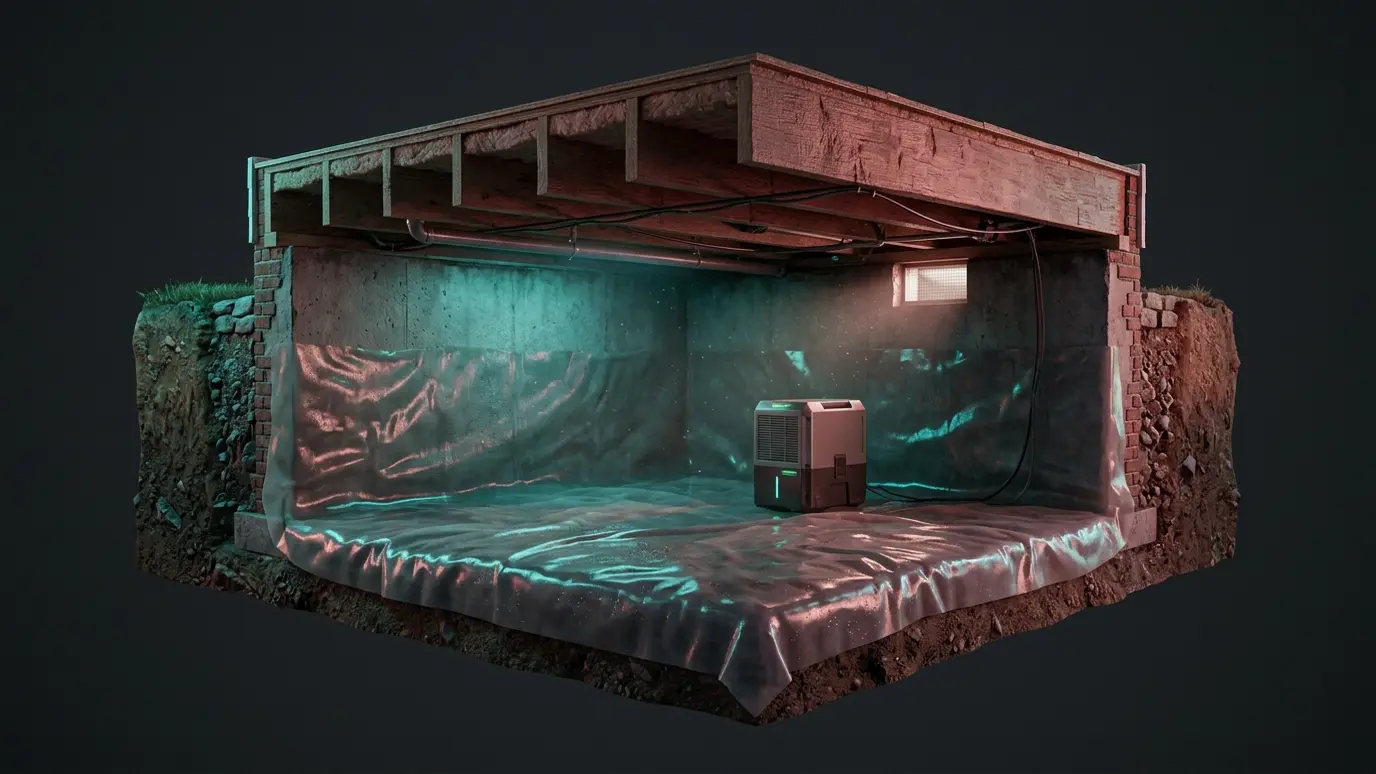
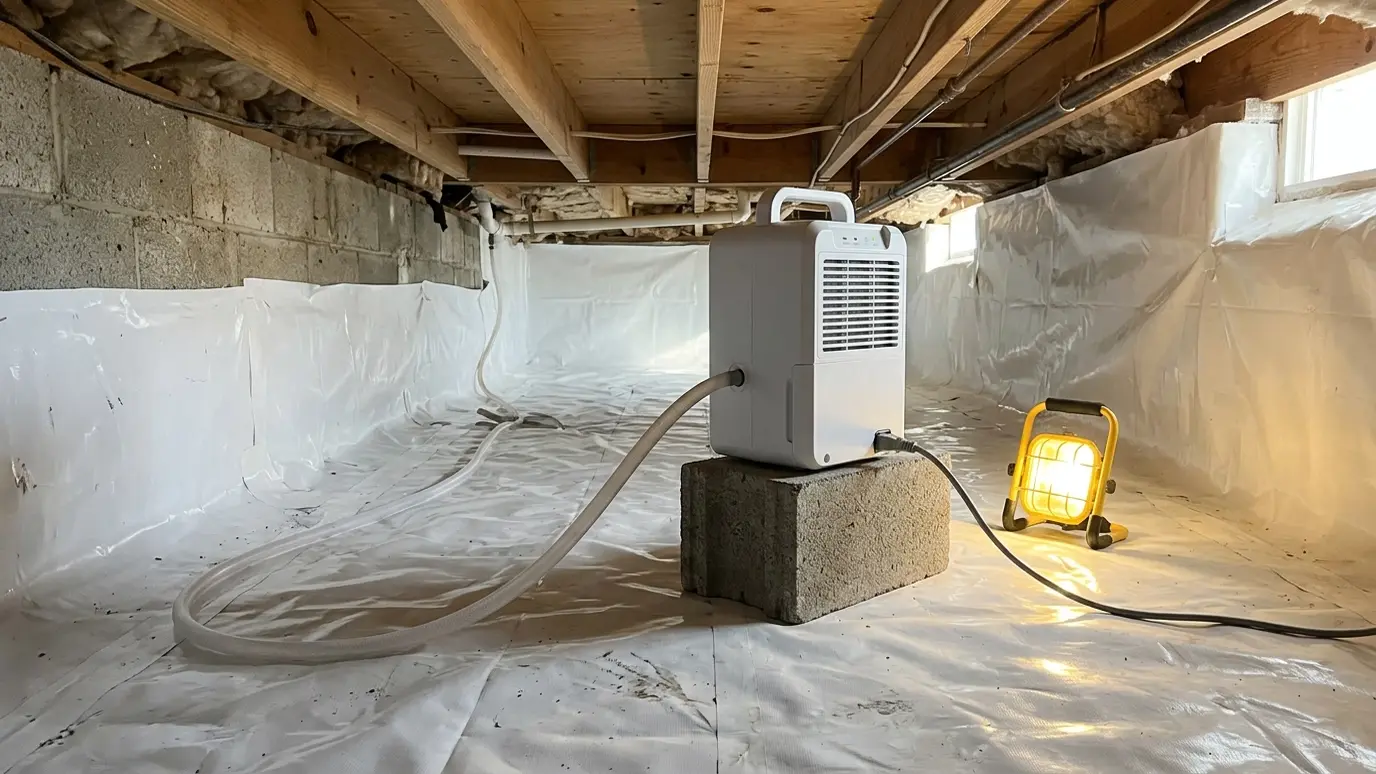
A properly sized dehumidifier pulls moisture from the air and drains automatically. It works most effectively in a sealed space.
In a leaky basement, it fights a losing battle.
Cleaning mold
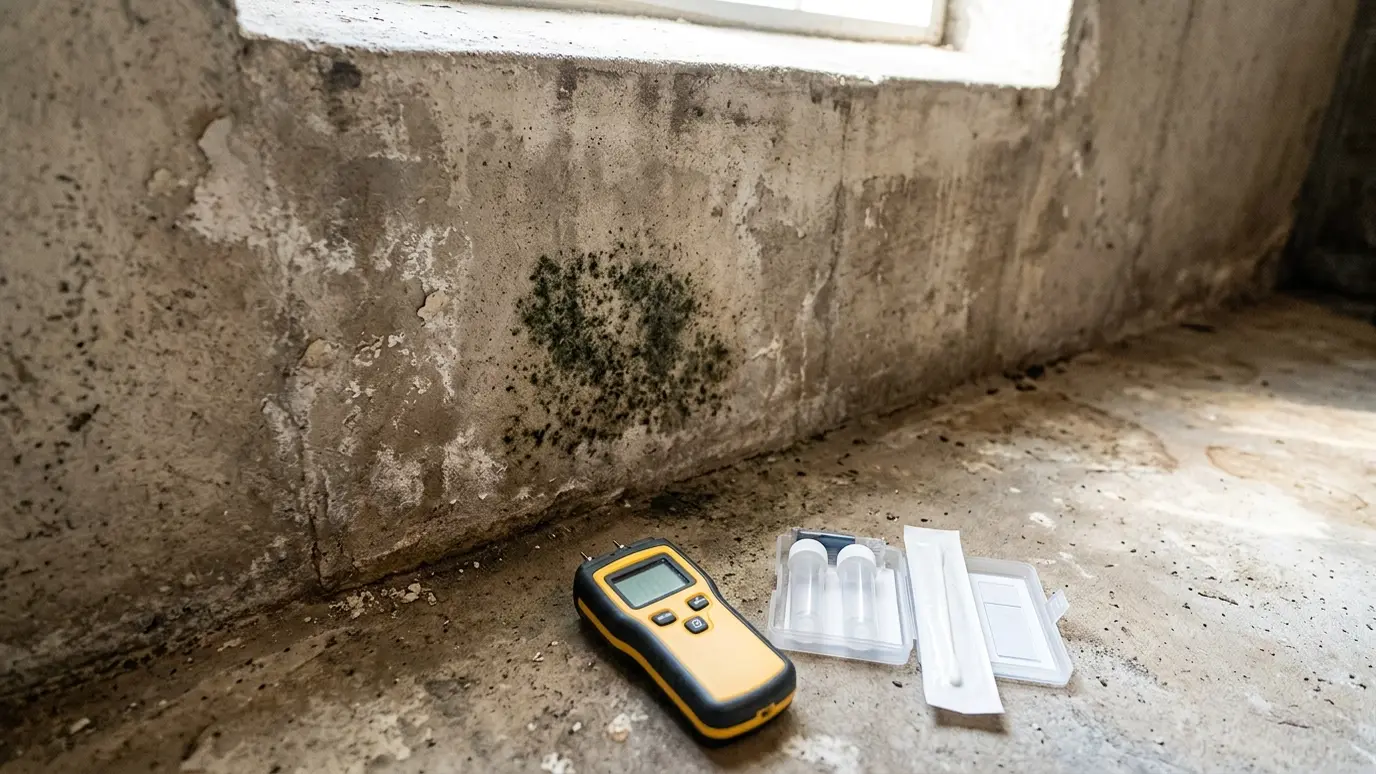
Small surface spots can be cleaned and dried. Large areas, repeated growth or materials that stay damp need professional help and the moisture source fixed.
Cleaning without drying only buys time.
Testing
Air or surface samples sent to a lab can identify what is growing, which is useful for sales, rentals or when the source is unclear.
For health concerns, ask your doctor.
Measure humidity, find the moisture, fix it and keep readings in a safe range with sealing and dehumidification.