Why vented crawl spaces fail
Building codes once required vents to let air through, but in humid climates that air carries moisture that condenses on cool surfaces.
The result is damp wood, mold and a musty house.
The liner
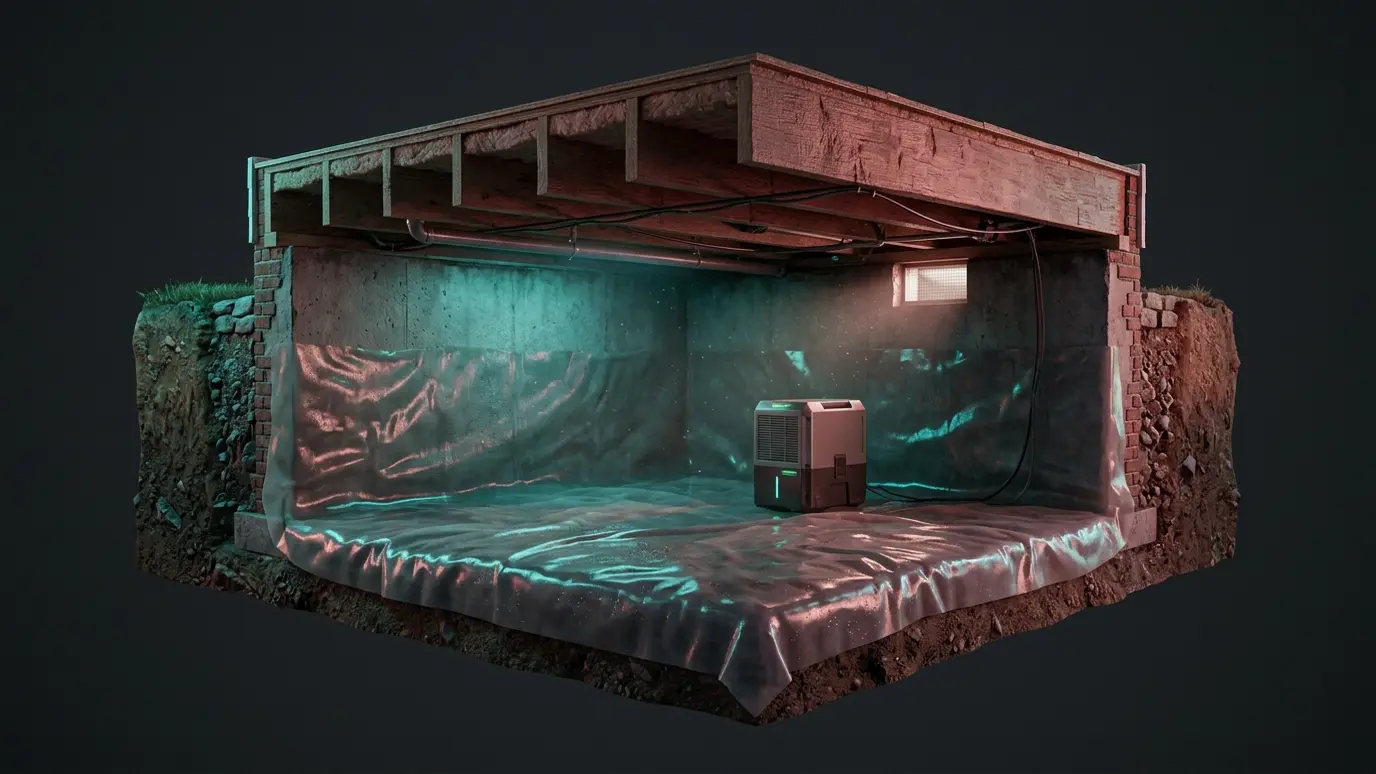
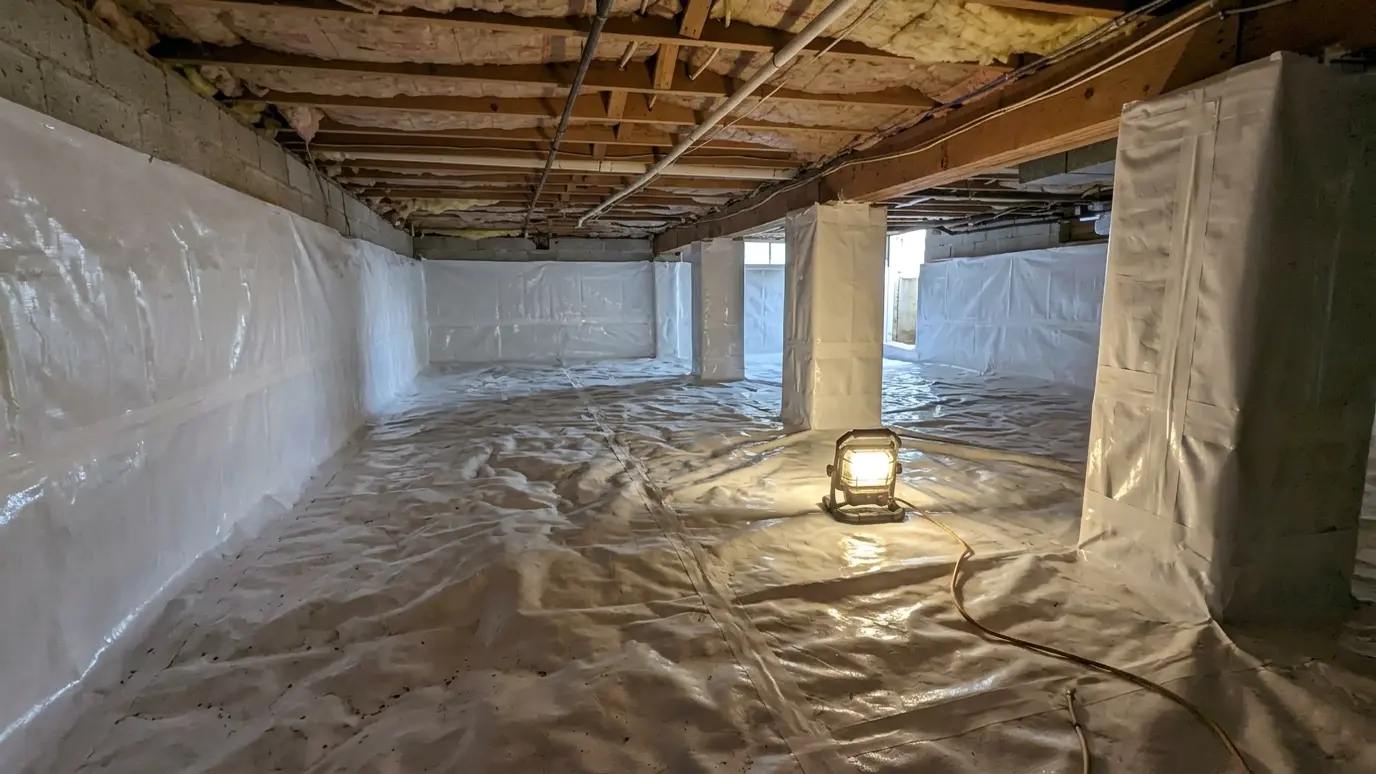
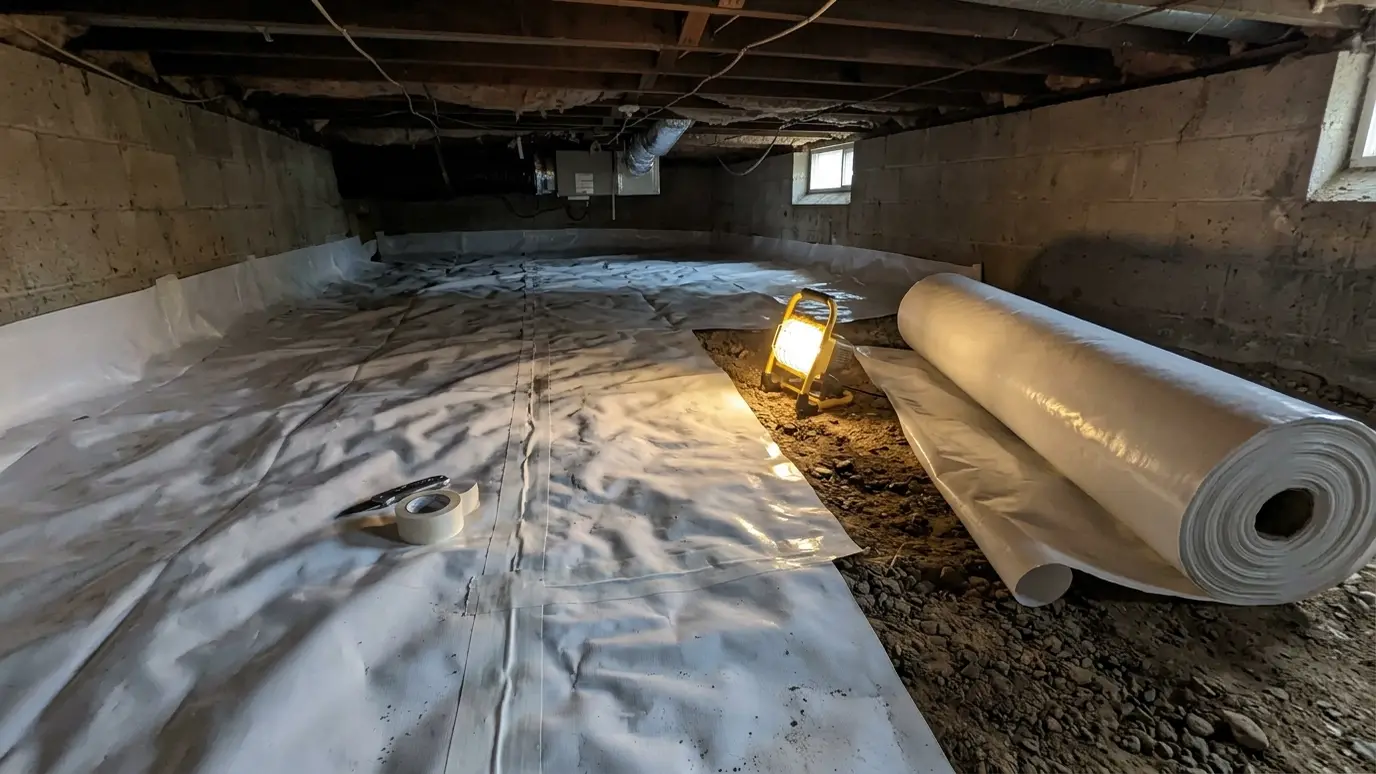
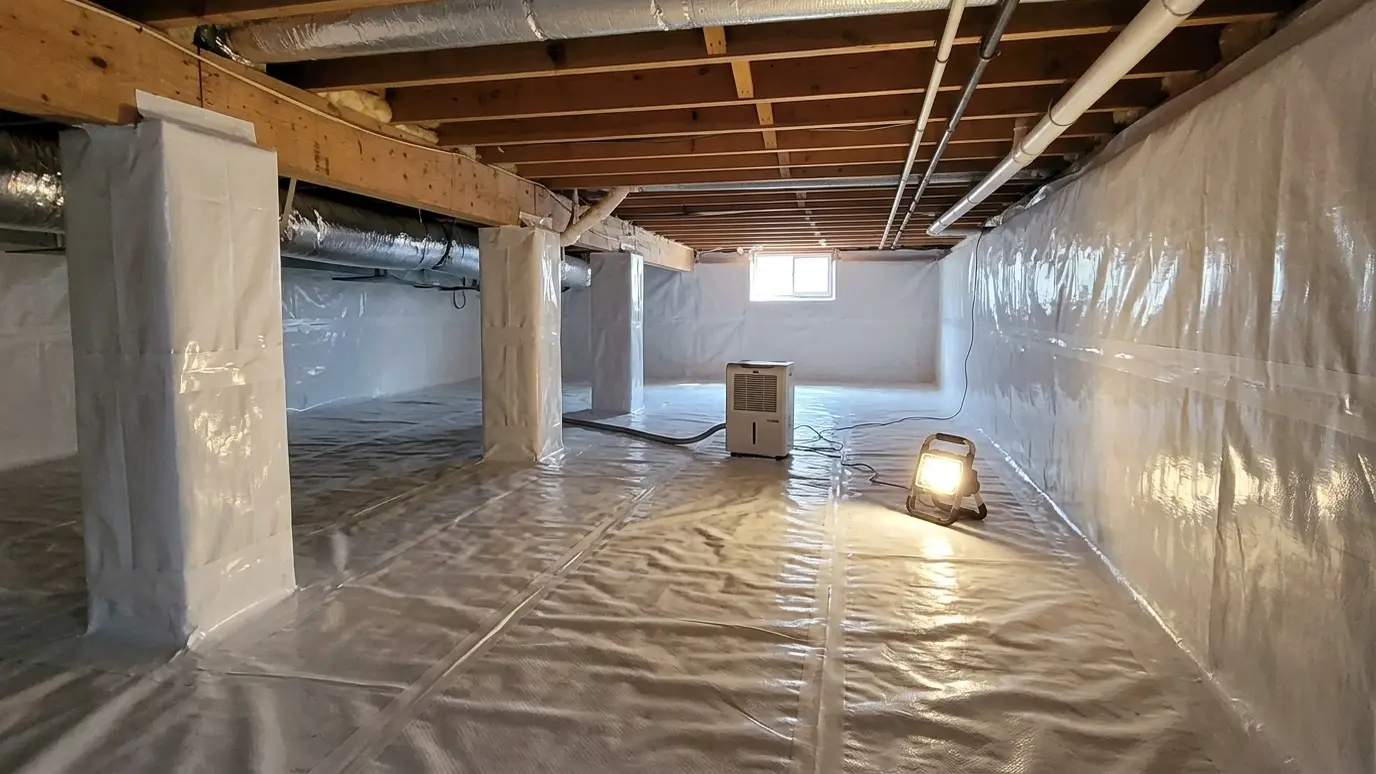
A thick liner covers the floor and runs up the walls, with overlapped, taped seams. It blocks ground moisture from the space.
The liner is fastened to the walls and sealed around piers and posts.
Closing the vents
Sealing vents keeps humid outside air out. The crawl space becomes part of the conditioned envelope.
It is the step that changes the nature of the space.
The dehumidifier
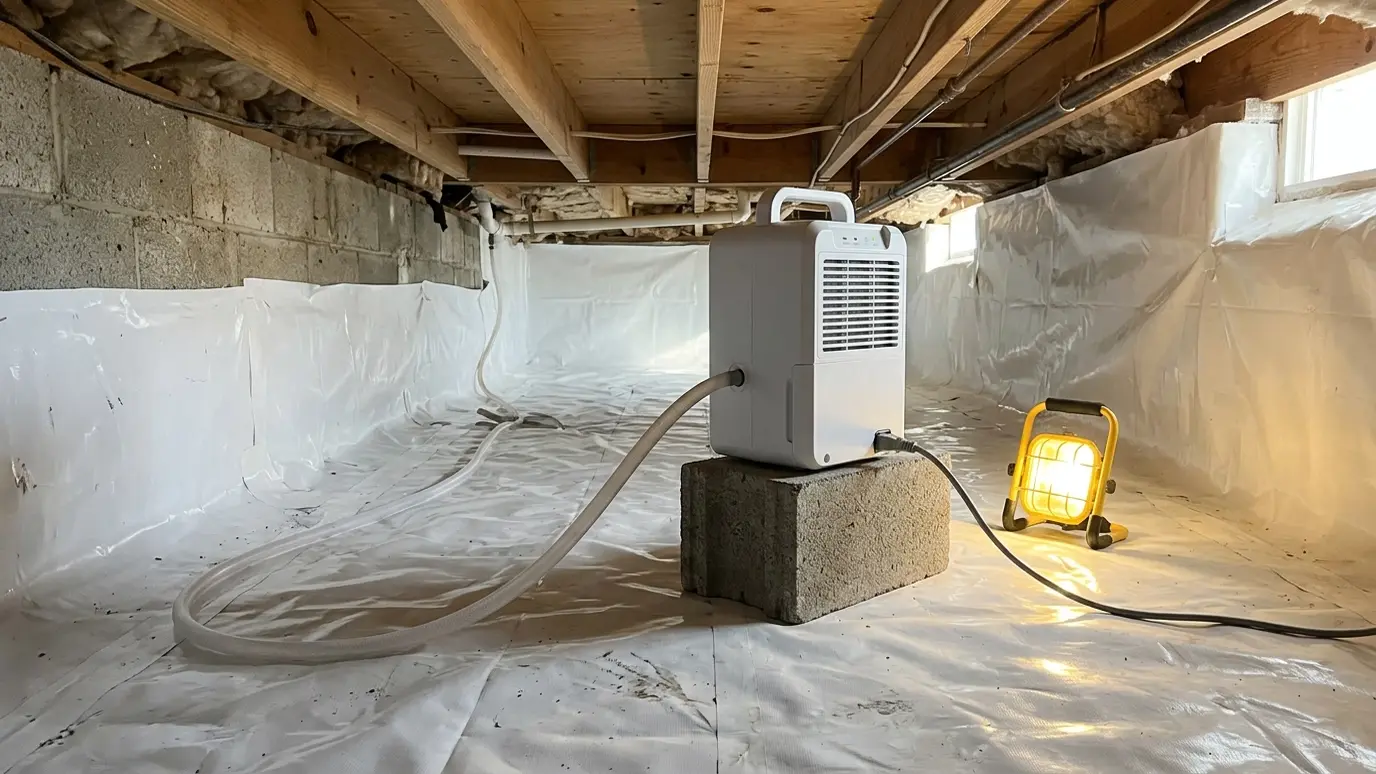
A crawl-space dehumidifier holds humidity steady and drains automatically. It is the final control layer.
A hygrometer shows the reading, so you can see the results.
Drainage first
If water enters, a drain and sump must come before the liner. Encapsulation is not a way to hold standing water.
We check the site and the grade before we start.
Is it worth it?
For crawl spaces with damp soil, musty odors, mold, rotting wood or high humidity, it usually is.
A dry, clean crawl space is also easier to inspect and maintain.
Fix any water entry first, then seal the space, close the vents and control humidity, because each step needs the others.